Between air raid sirens and construction site meetings, Dmytro Sivak continues to run his practice in Odesa. A conversation about architecture under wartime conditions, shattered life plans, and a new sense of patriotism among Ukraine’s designers.
Nadin Heinich: When did you found Sivak+Partners?
Dmytro Sivak: I founded my studio in 2012, right after graduating. In Ukraine, it is relatively easy to work as an interior architect; there are hardly any government regulations. Many people even work on a cash basis. In the early 2000s, many clients still lacked an appreciation for good design. That has changed dramatically over the past ten years. Ukrainian interior architects suddenly began appearing in international magazines, and younger clients started placing their trust in designers. Over the past five years, this development has increasingly extended to architecture as well.
Nadin Heinich: What did the beginning of Russia’s full-scale invasion mean for you?
Dmytro Sivak: At first, everything came to a standstill for about a month. No one knew what would happen next. Then, for roughly six months, we were extremely busy with projects both in Ukraine and abroad. It was a strange situation: the country was at war, yet at the same time we seemed to be carrying on with our work almost as if everything were normal.

Nadin Heinich: Has the way you work changed?
Dmytro Sivak: During the first months of the war, about half of our team left the country—some moved to Europe, others to the United States. One of our employees was drafted into the army; he did not volunteer. Before the war, most of us worked from one of our offices in Odesa or Kyiv. Today, we are scattered across the world. But everyone has developed a strong sense of responsibility, much like during the pandemic. We discuss our projects via video calls several times a week.
Before the war, I had 19 employees; today we are just under ten. We closed our Kyiv office. We are no longer operating at full capacity, but that is okay—everyone had been working extremely hard before anyway. Since the war began, many people have reassessed their priorities in life, including the question of why they work. I work more than ever now—I own the practice. I used to be able to delegate, whereas today I often have to visit construction sites myself. Many aspects of the job have become more hands-on and detail-oriented, but I’ve actually come to enjoy that.
My first instinct was to leave as well. I thought: perhaps this war will never end. Perhaps the past seventy years were merely a historical exception, and this region between Europe and Russia will remain a battleground for the great powers indefinitely. Under different circumstances, I might have left.
Nadin Heinich: Why did you decide to stay?
Dmytro Sivak: My family, my work—my entire life is here. I don’t know… perhaps it’s my age. When you leave at 35, you have to start all over again. That’s difficult. I know many friends who emigrated to Europe or elsewhere but are unable to work there or afford a place to live. Highly talented architects suddenly find themselves drawing tile layouts. After two agonizing days of thinking it through, I decided to stay. Was it really the right decision? I honestly don’t know.
Nadin Heinich: Who commissions architects in Ukraine today?
Dmytro Sivak: Before the war, around 80 percent of our work consisted of private residential projects. Today, about 80 percent is commercial interiors. Those who have money are more likely to invest in new cafés, restaurants, or retail spaces. The three apartments we completed in Kyiv last year are not occupied by their owners—they are rental properties.
When you design an apartment, usually only other designers notice. But when you create a great café, half the city talks about it. In that sense, this shift may actually have been positive for us.
Of course, many people are afraid. One of our long-standing clients left Ukraine when the war began. She returned after two years with plans to build rental apartments in Odesa. But after spending just three days in the city, the missile and drone attacks frightened her so much that she abandoned the project immediately. In another case, the windows for a private house, which were still stored at the factory, were destroyed in a missile strike. Our client lost USD 50,000. Fortunately, he was wealthy enough to order them again.
Because of the war, we also lose workers on almost every project. Even men working on construction sites are drafted into the army. As a result, it has become extremely difficult to find tradespeople willing to work outdoors. In one case, we eventually found a 60-year-old tiler—everyone younger was too afraid. And sometimes a painter calls the site manager and says, “I’m sorry, I won’t be on site today. I’m in another country now.” He simply left without telling anyone beforehand.
Nadin Heinich: Odesa comes under attack almost every night—at the very least from Russian drones, and repeatedly from missiles. How has the war affected your life? Are you ever afraid?
Dmytro Sivak: One of our clients owns a café. He tells us that cafés and restaurants are especially busy on the mornings after heavy attacks. People simply feel the need to treat themselves to something nice.
What I miss most is the freedom to travel. Under martial law, men are not allowed to leave the country. And in our situation, it is almost impossible to make long-term plans. Before the war, we wanted to build a world-renowned design practice. Today, I can hardly imagine drawing up a growth strategy for my office. Our planning horizon extends only a week ahead—perhaps a month at most.
Nadin Heinich: But your projects last much longer than a month…
Dmytro Sivak: Of course—they are projects we work on to make a living. But I mean something more fundamental: what you want from life. Before the war, we always had plans for the future. For me, one of the worst consequences of this war is no longer being able to make plans—and not knowing when that will be possible again. I’m sure Russia has experts in psychological warfare. One of their most effective weapons is depriving the whole of Ukraine of its future. People no longer want to start families or have children because they simply don’t know what comes next.
Of course, things could be much worse. I could be on the front line. I could have lost an arm or a leg—there are countless possibilities. My family and my closest friends are still alive. As long as I can buy a coffee and a croissant, it’s been a good day…
Nadin Heinich: At the same time, there are many young designers who are proud to be Ukrainian and express this through their clothing, jewellery, interiors, and other creative work.
Dmytro Sivak: That development actually began around 2014 and has grown steadily stronger ever since. I spoke Russian all my life. It was only after the war began that I started engaging more deeply with the Ukrainian language. If you’re born in Germany, you almost have to be optimistic—so many world-famous companies come from there: BMW, Mercedes. Around Odesa, by contrast, there isn’t much at first glance: the sea to the south, the steppe to the north. That makes it all the more important to create good restaurants, cafés, and other places for people. A city needs great places. Someone has to create them.
It is sad that some of the entrepreneurs who helped shape the city have left because of the war. At the same time, some of the less talented entrepreneurs and designers have left as well. Those who stayed generally have a much stronger sense of patriotism. We want to do something good for our city and our country. In a way, the city is being renewed through this process.
Nadin Heinich: In your view, how should Europe—and Germany in particular—respond to this war and to Russia?
Dmytro Sivak: Before the war began, I would never have believed that something like this could still happen in the 21st century. Why wage a war? It seemed completely unimaginable. Even today, I don’t understand what Russia hopes to achieve. Perhaps one day they will explain it to us…
I don’t want to give grand advice, only this: Be prepared. I never used to think about whether my car had a full tank of fuel. Why would I? Then suddenly there was no petrol for six months. After the Second World War, my grandmother kept leftover bread as if it were something sacred. I never really understood that when I was younger. But I will probably be exactly the same when I am old.
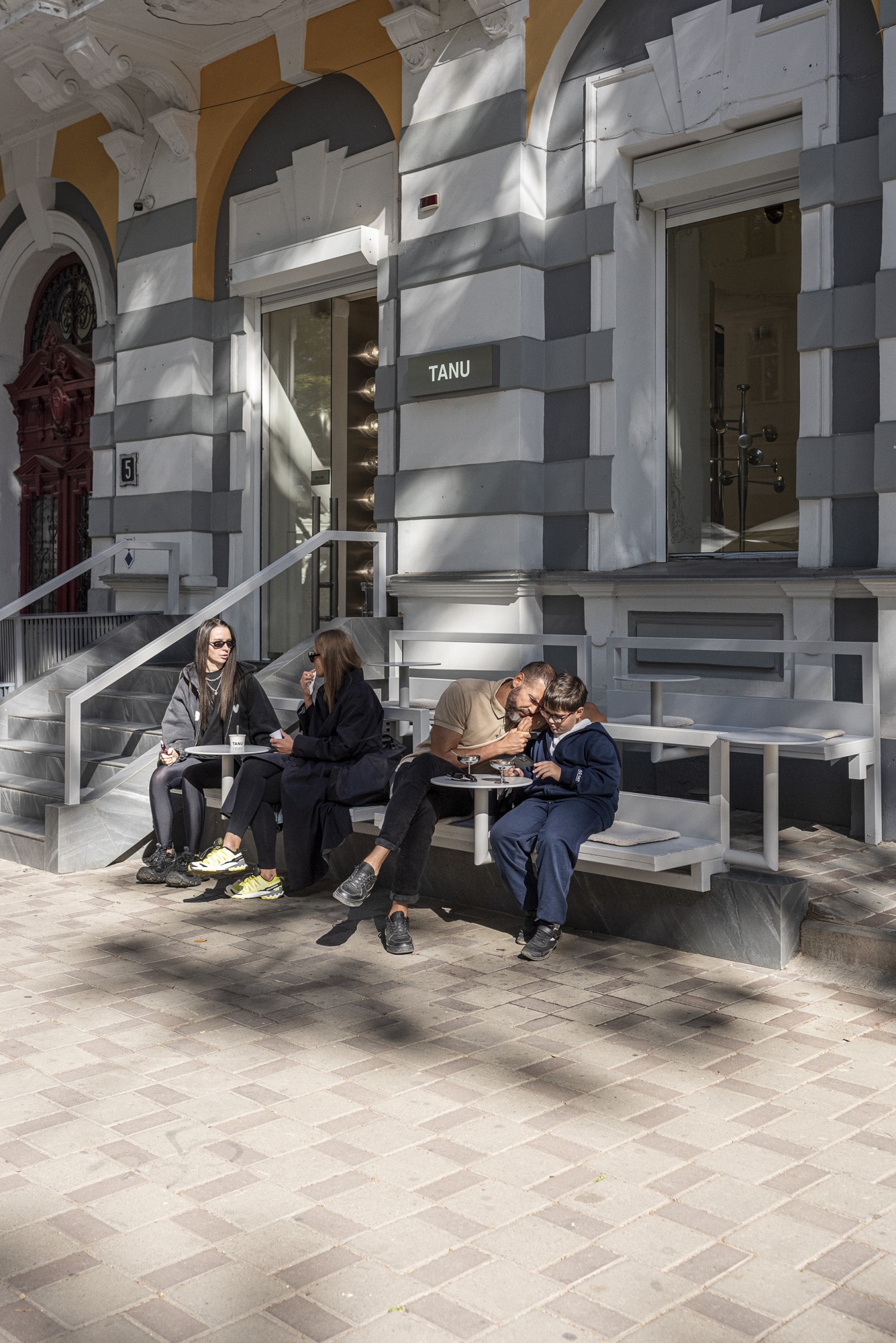
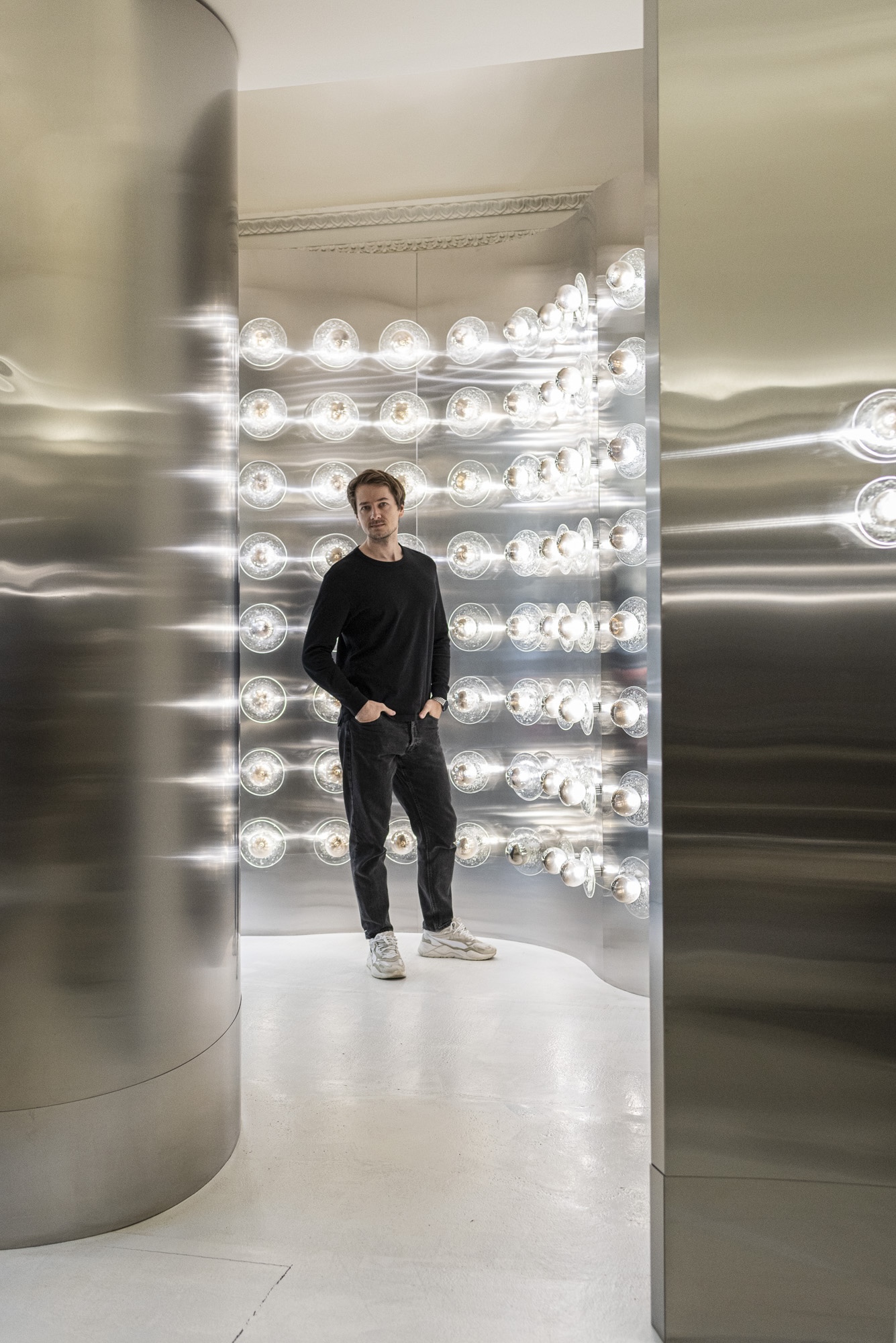
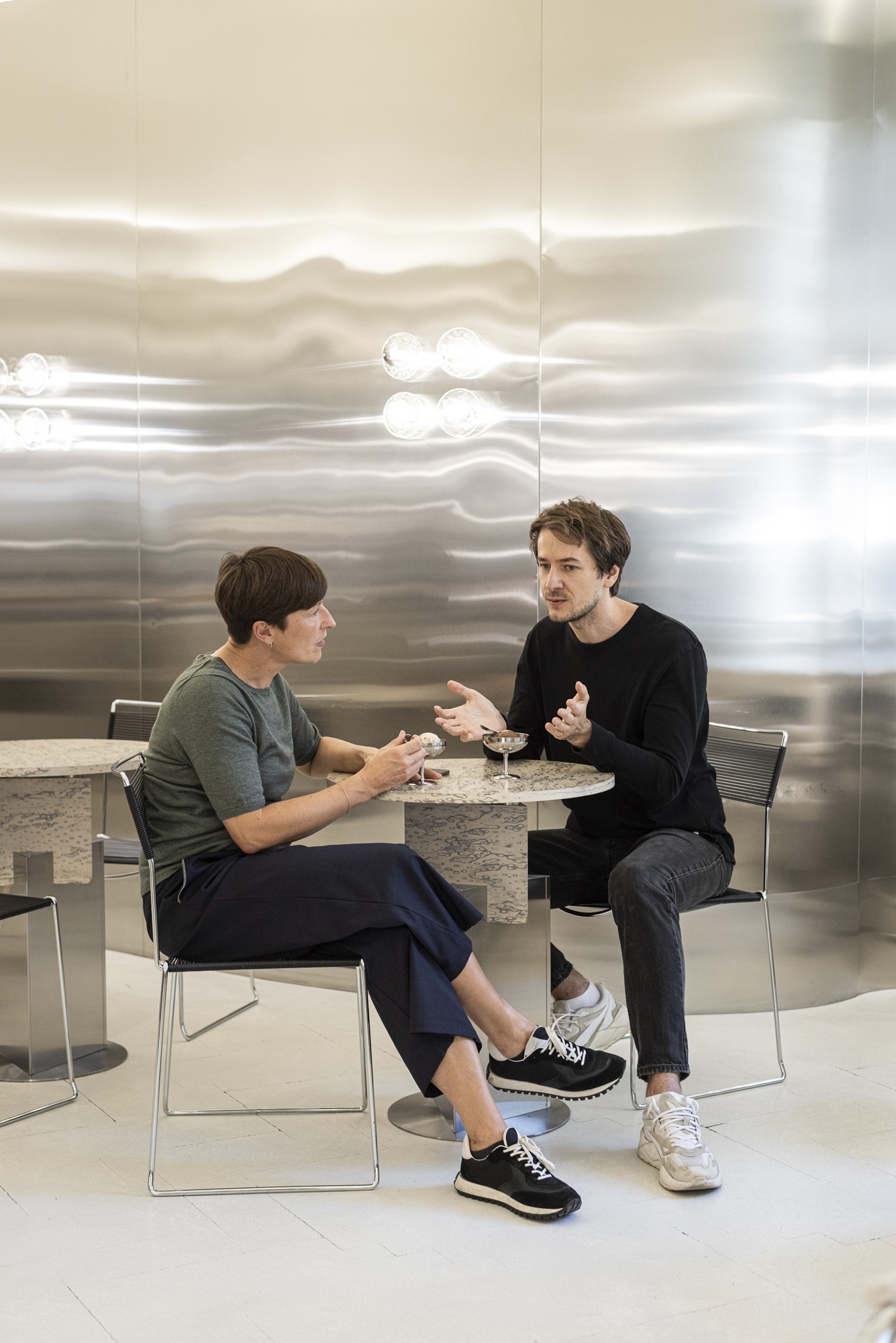
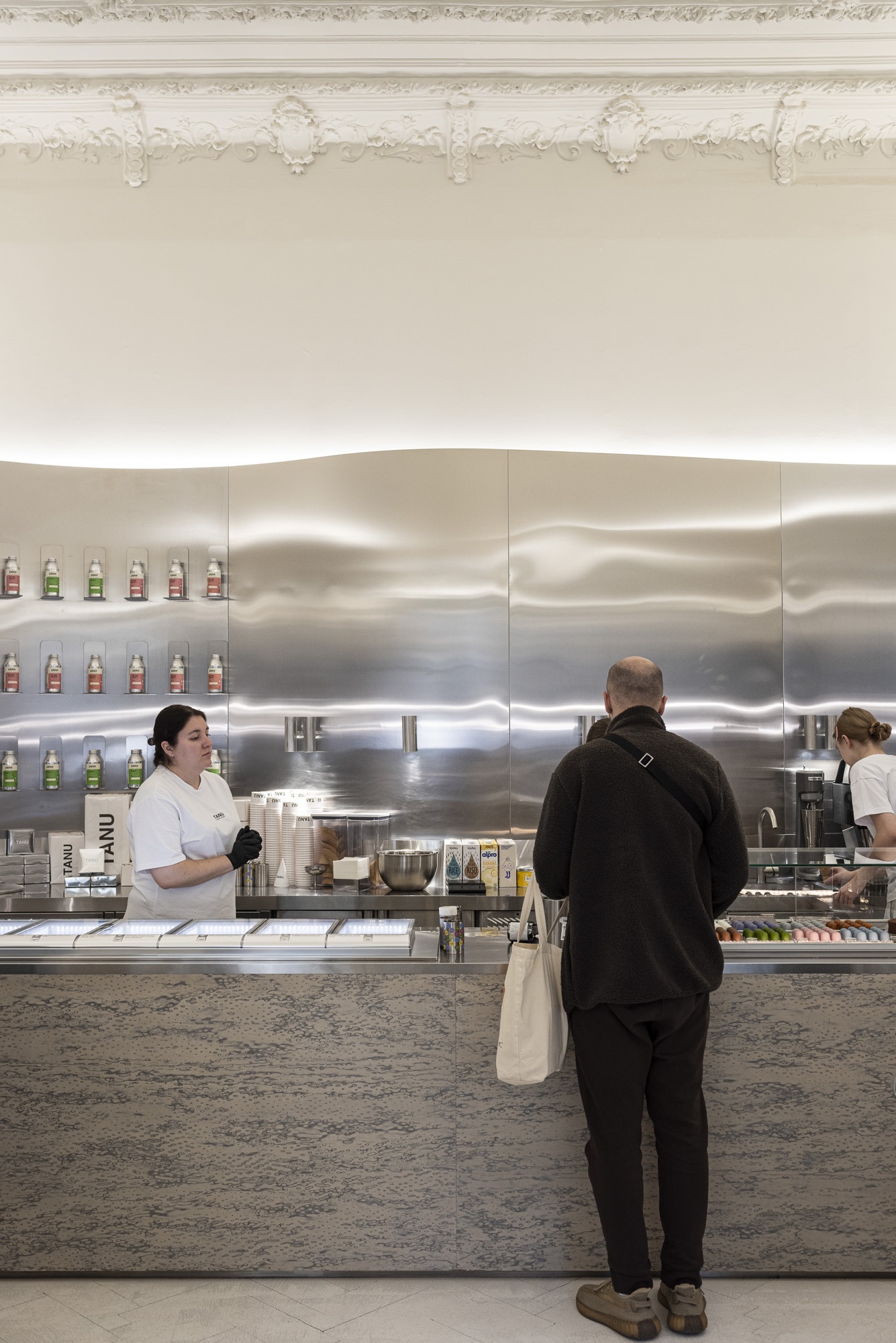
About: Dmytro Sivak is an interior architect and designer based in Odesa. In 2012, he founded Sivak+Partners, a practice with offices in Odesa, Kyiv, and New York that today employs around ten architects and designers. The photograph shows Sivak at the Tanu ice cream parlour, a project completed by his team in 2022.
Text: Nadin Heinich
Photos: Heinrich Völkel
Odesa is younger than its myth suggests—and at the same time older than Catherine the Great. The name “Odesa” first appeared in a document dated 21 January 1795. In 1792, following the Treaty of Jassy, the territory became part of the Russian Empire. Two years later, Catherine II ordered the construction of a military harbour and commercial port at the settlement then known as Khadzhibei. Under the direction of the Spanish-born officer José de Ribas, work on the harbour facilities and cathedral began on 2 September 1794—a date that Odesa continues to celebrate as the city’s official founding day.
Yet the new city was not built on empty land. Khadzhibei had existed since the early fifteenth century as a settlement founded by the Crimean Khan Hacı Bey, complete with a fortress, mosque, Muslim cemetery, taverns and an already significant grain port. Over the centuries, the settlement passed from the Crimean Khanate to the Grand Duchy of Lithuania, later to the Ottoman Empire, and only afterwards came under Russian rule. The imperial narrative of Odesa’s “founding” by Catherine the Great largely overlooks this earlier history.
During the nineteenth century, Odesa developed into one of the Russian Empire’s most dynamic ports and trading centres. Its rise was driven by the success of the harbour, liberal administrative policies and its status as a free port between 1819 and 1859. Governors such as the French-born Duke of Richelieu, who led the city from 1803 to 1814, and later Count Mikhail Vorontsov, Governor-General of New Russia and Bessarabia, laid out its strict orthogonal street grid, recruited Western engineers and physicians, and established theatres, a public library, a lycée and learned societies. Trade in grain and other commodities attracted Germans, Greeks, Jews, Italians, Ukrainians, Russians, Armenians and many others. Cosmopolitan Odesa became the fourth-largest city in the Russian Empire, after St Petersburg, Moscow and Warsaw. This period is still widely regarded as the city’s “Golden Age”.
It is precisely this legacy that makes today’s debates so contentious. Odesa’s Golden Age was inseparable from the structures of the Russian Empire. Under the 2023 Ukrainian law On the Condemnation and Prohibition of the Propaganda of Russian Imperial Policy in Ukraine and the Decolonisation of Toponymy, municipalities are required to remove from public space names, symbols and monuments associated with the Russian Empire, the Soviet Union or the present-day Russian Federation.
