Volodimir Chigrinets, curator at the Odesa National Fine Arts Museum, on evacuated artworks, the role of museums during wartime, and the rediscovery of Ukraine’s cultural history.
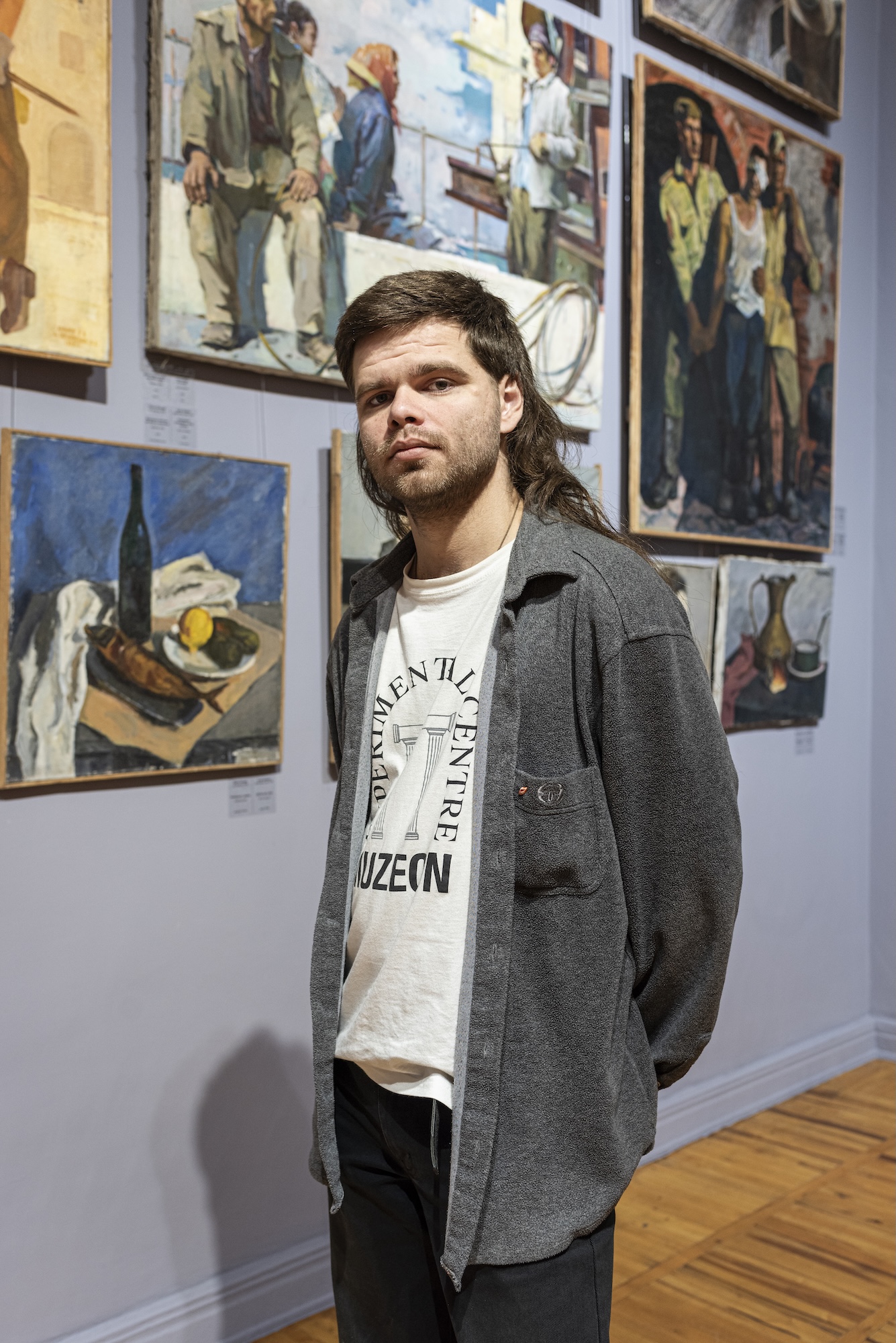
Nadin Heinich: Since the start of the war, numerous collections from Ukrainian museums have been evacuated. Where is the collection of the Odesa National Fine Arts Museum today?
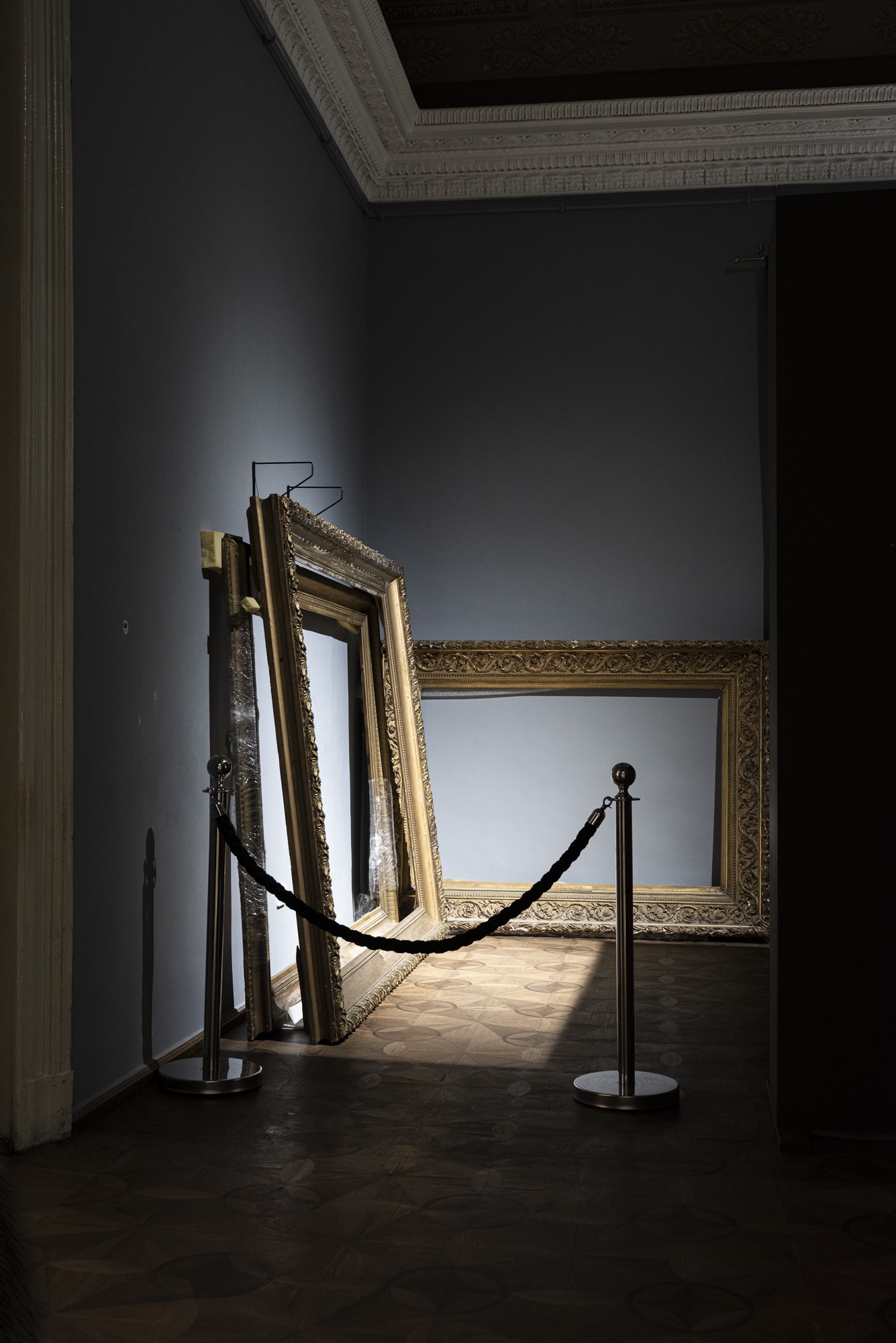
Volodimir Chigrinets: For security reasons, that information remains confidential. The collection has been dispersed across several locations. It comprises more than 10,000 works, dating back to the 16th century. What is publicly known is that many museum collections have been relocated within Ukraine, while selected holdings have also been transferred abroad. For example, 74 paintings from the Odesa Museum of Western and Eastern Art were brought to Berlin, where 60 of them were exhibited at the Gemäldegalerie in 2025.
Nadin Heinich:Do you still have access to the evacuated works?
Volodimir Chigrinets: In principle, yes. In practice, however, bureaucratic procedures make access difficult.
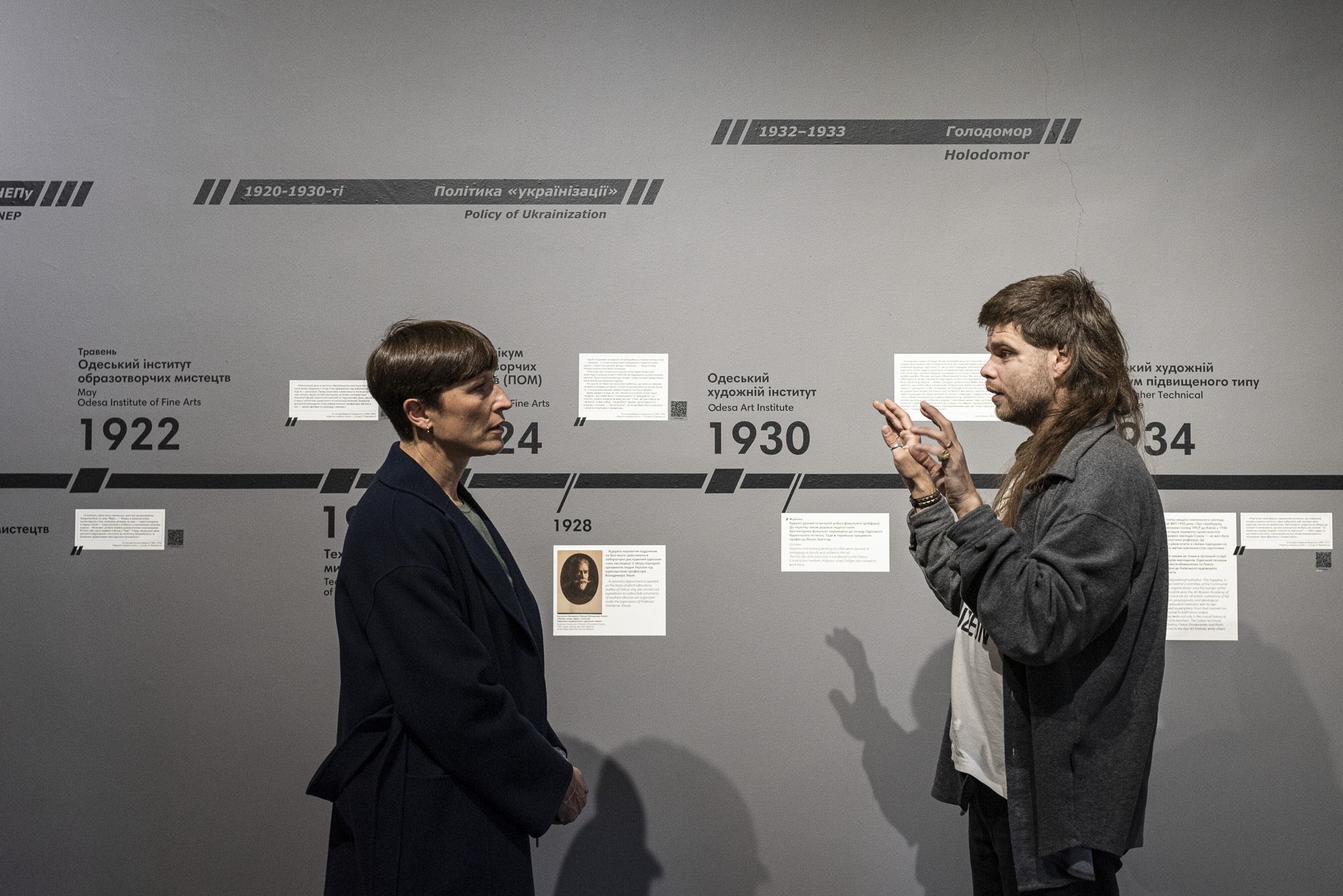
Nadin Heinich: How has the museum changed since the beginning of the war?
Volodimir Chigrinets: Immediately after the full-scale invasion began, the museum’s curator at the time organized several exhibitions about the war. Some were extremely difficult to endure. Many visitors were deeply shocked by the images of dead and mutilated bodies. Even so, I believe it was the right decision. Over time, however, a certain sense of habituation set in.
Nadin Heinich: In the same way that we’ve grown accustomed to the war itself—or at least to the images of it?
Volodimir Chigrinets: Yes. Gradually, the museum returned to its core mission, focusing once again on subjects such as 20th-century art. It is part of the city’s infrastructure, part of everyday life that, despite everything, has to continue. We are sitting here in an exhibition on the Grekov School, founded in 1865 and one of Ukraine’s oldest art institutions. Not all of its collection was evacuated, which is why we are able to present it. Today, when people come to the museum, they want to see art—not war.
Nadin Heinich: What can—and what should—art achieve in a country at war?
Volodimir Chigrinets: I have two answers to that. The first is that art does not have to achieve anything. It simply exists.
It is an echo of history, an echo of the present moment. The war has only reinforced this conviction. Many artists stopped creating altogether. Some joined the armed forces and have yet to return to artistic practice. One painter we had been preparing an exhibition with told me that after February 2022 he felt it was almost immoral to make art—that there were more important things to do. For nearly a year, he remained silent. Then he began working again. In his earlier paintings, his figures had either no mouths or only faintly suggested ones. Now, for the first time, he painted screaming men with mouths wide open. Perhaps the process was therapeutic. Helping oneself may well be the true essence of art.
Of course, art can also serve as propaganda—perhaps even when artists themselves are unaware of how strongly their work is shaped by a closed political perspective. At the same time, art can help us process experience, pause, and look more closely. For me, however, its most important role at this moment is to make Ukrainian history visible—not only the history of art, but history in a much broader sense. For a long time, our view of our own past was obscured. Art can help us see it with fresh clarity.
Nadin Heinich: Were there such things as “Ukrainian” artists in the Soviet Union?
Volodimir Chigrinets: As a rule, they were all subsumed under the label “Soviet”—even if they had been born, studied, or worked in Kyiv. Kazimir Malevich, for example, had close ties to Ukraine, yet for decades he was primarily understood as a Russian or Soviet artist. In recent years, many of us have begun to reassess these attributions. You can feel that shift in the museum. Curators are asking questions that remained unasked for decades. They are turning their attention to artists who were executed in the 1930s, as well as to those who were presented as Russian for generations.
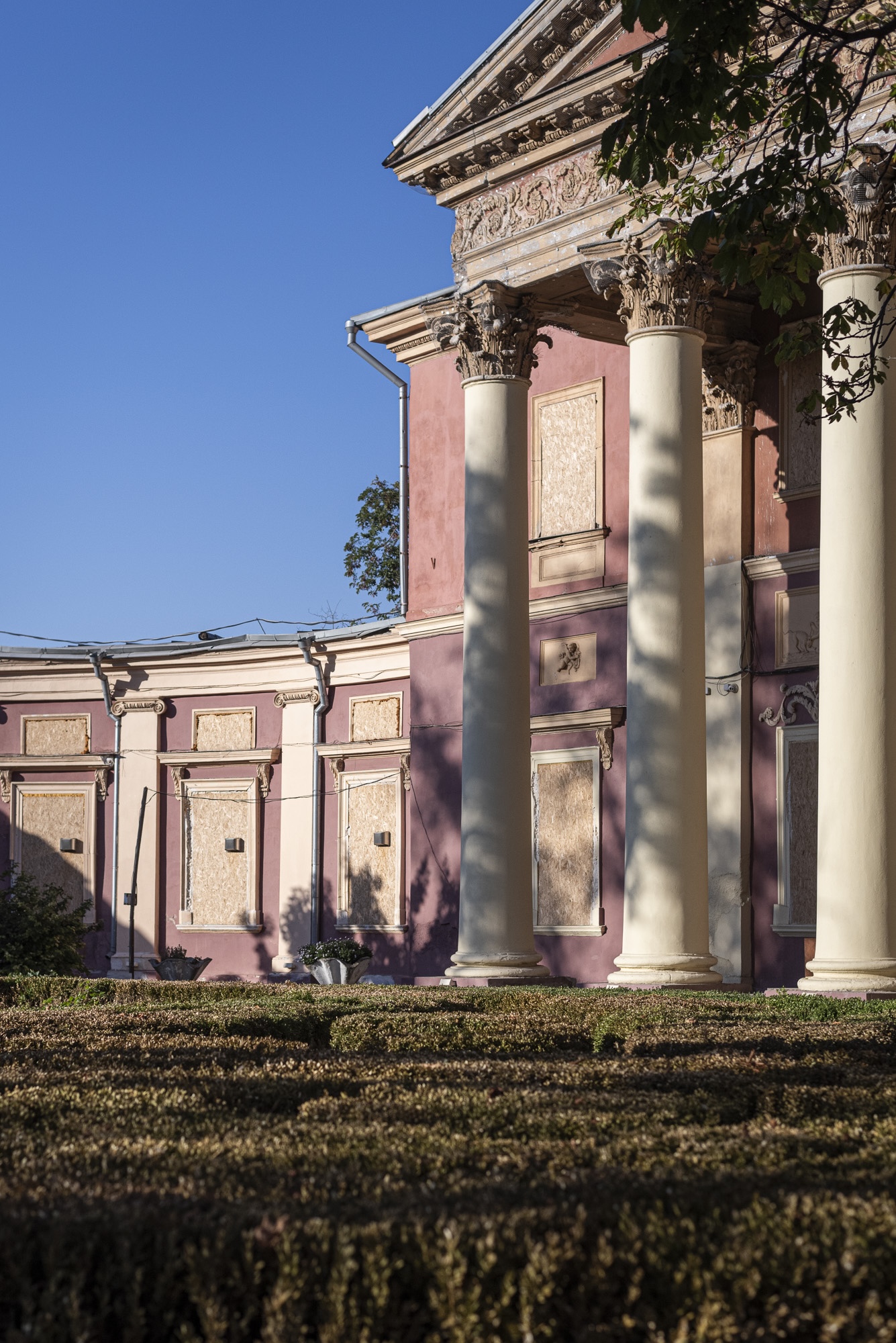
Nadin Heinich: Does that mean Ukraine’s history is being rediscovered—also, and perhaps especially, as a result of the war?
Volodimir Chigrinets: Yes, very much so. After the Euromaidan, interest in Ukrainian art grew significantly, along with the search for a distinct cultural identity. Since 2022, that development has accelerated even further. You can see it in the publishing industry as well: there has been a remarkable increase in books on Ukrainian history, identity, and culture.
Nadin Heinich: In few Ukrainian cities is dealing with the Russian—or Soviet—heritage as complex as it is in Odesa. Do you think it is right that Russian street names are disappearing—for example, when Pushkinska Street is renamed Italiiska?
Volodimir Chigrinets: Italiiska is not a new name; it is an older one. So this is not simply a matter of erasure, but also of restoration. The process is not over, and some streets may well be renamed again in the future. One of the city’s main streets was originally called Henuiska, then Karla Marksa under Soviet rule, Adolfa Hitlera during the German occupation, later Katerynynska, and today Yevropeiska. Such decisions reflect a particular historical moment. Street names inscribe political eras into the fabric of the city—why should our own era refrain from doing the same?
The question of Odesa’s founding is equally political. For me, it is important to understand the city’s history as a layered process, shaped by Lithuanian, Ottoman, and Russian imperial influences. It is neither about denying the history of the Russian Empire nor about suppressing the city’s pre-imperial past. What matters is making all these historical layers visible.
Despite all the tensions, I believe these debates are necessary. Without conflict, there can be no serious public discussion. Odesa was long a predominantly Russian-speaking city, and Putin exploited that fact. Suddenly the argument became: if so many people here speak Russian, they must want to join Russia. That is simply not true. But such narratives could gain traction because there was already a surface onto which they could be projected. People who think critically can see through this manipulation. Those who consume information passively are far more vulnerable to it.
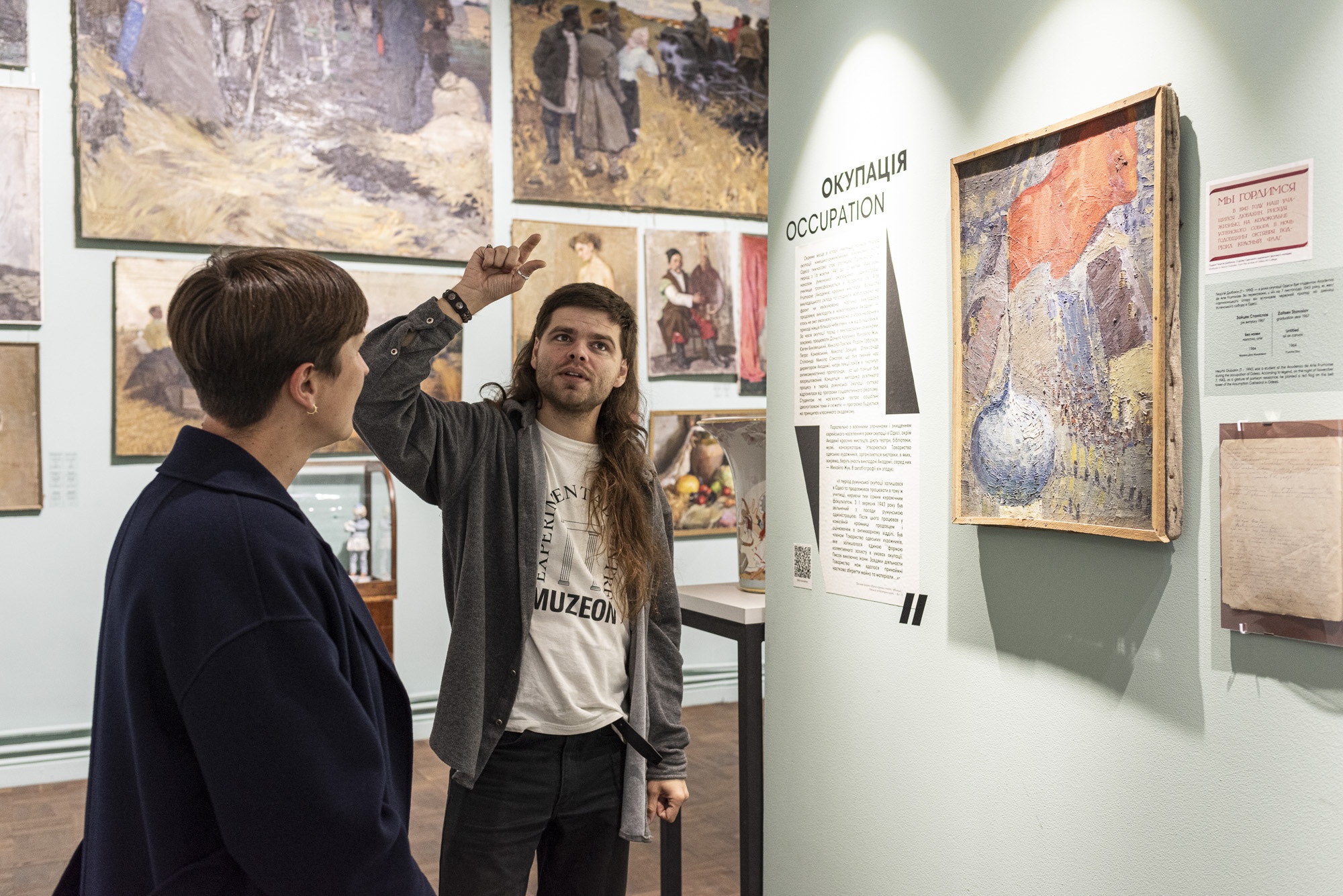
Nadin Heinich: Do you believe the war will end soon?
Volodimir Chigrinets: No. My friends, I, and most people of my generation don’t believe that. There may eventually be a ceasefire, as there was after 2014. But most Ukrainians do not see this as a war that began in 2022. We have been at war with Russia since 2014—sometimes openly, sometimes covertly; at times more intensely, at others in the background.
Nadin Heinich: But that also means the likelihood of you being drafted is increasing.
Volodimir Chigrinets: Of course. I work at a national museum and, until now, my position has offered a certain degree of protection. But I don’t expect that to last. The regulations have already changed, and some positions that were initially exempt from mobilization have since lost that status. I assume that one day I, too, will be called up.
Many of my friends and I live with a kind of fatalistic optimism. We carry on, we do our work, we adapt to this life. Perhaps in a few years we’ll be dead. But until then, we have to do something that leaves a trace—in history, in ideas, in art. When you immerse yourself in Ukrainian history, you repeatedly encounter the lives of people who were persecuted or killed because of their convictions and their art.
Nadin Heinich: During Stalin’s terror?
Volodimir Chigrinets: Yes. Under Stalin, countless Ukrainian artists were destroyed, above all writers and poets. Many of them were by no means anti-Soviet. On the contrary, they saw themselves both as Ukrainians and as participants in a new socialist project. They wrote in Ukrainian and believed in the possibility of a new Ukrainian-Soviet society.
When it comes to rethinking our own identity, looking beyond Odesa itself to the wider region is just as important to me. From the perspective of the political center, what tends to dominate is the history of the Russian Empire. But if you widen your view, a very different picture emerges: a complex, multi-layered region shaped by settlements of many different ethnic and national communities.
A Ukrainian intellectual of the late nineteenth century once wrote that anyone wishing to understand that Odesa is a Ukrainian city should go to its outskirts—because that is where Ukrainian was spoken. In the city center, by contrast, the language of the empire prevailed, for practical reasons as much as political ones. Anyone moving between the city’s diverse communities needed it in order to belong. Yet that often came at the cost of cultural heritage and of people’s connection to their own roots.
Odesa is younger than its myth suggests—and at the same time older than Catherine the Great. The name “Odesa” first appeared in a document dated 21 January 1795. In 1792, following the Treaty of Jassy, the territory became part of the Russian Empire. Two years later, Catherine II ordered the construction of a military harbour and commercial port at the settlement then known as Khadzhibei. Under the direction of the Spanish-born officer José de Ribas, work on the harbour facilities and cathedral began on 2 September 1794—a date that Odesa continues to celebrate as the city’s official founding day.
Yet the new city was not built on empty land. Khadzhibei had existed since the early fifteenth century as a settlement founded by the Crimean Khan Hacı Bey, complete with a fortress, mosque, Muslim cemetery, taverns and an already significant grain port. Over the centuries, the settlement passed from the Crimean Khanate to the Grand Duchy of Lithuania, later to the Ottoman Empire, and only afterwards came under Russian rule. The imperial narrative of Odesa’s “founding” by Catherine the Great largely overlooks this earlier history.
During the nineteenth century, Odesa developed into one of the Russian Empire’s most dynamic ports and trading centres. Its rise was driven by the success of the harbour, liberal administrative policies and its status as a free port between 1819 and 1859. Governors such as the French-born Duke of Richelieu, who led the city from 1803 to 1814, and later Count Mikhail Vorontsov, Governor-General of New Russia and Bessarabia, laid out its strict orthogonal street grid, recruited Western engineers and physicians, and established theatres, a public library, a lycée and learned societies. Trade in grain and other commodities attracted Germans, Greeks, Jews, Italians, Ukrainians, Russians, Armenians and many others. Cosmopolitan Odesa became the fourth-largest city in the Russian Empire, after St Petersburg, Moscow and Warsaw. This period is still widely regarded as the city’s “Golden Age”.
It is precisely this legacy that makes today’s debates so contentious. Odesa’s Golden Age was inseparable from the structures of the Russian Empire. Under the 2023 Ukrainian law On the Condemnation and Prohibition of the Propaganda of Russian Imperial Policy in Ukraine and the Decolonisation of Toponymy, municipalities are required to remove from public space names, symbols and monuments associated with the Russian Empire, the Soviet Union or the present-day Russian Federation.
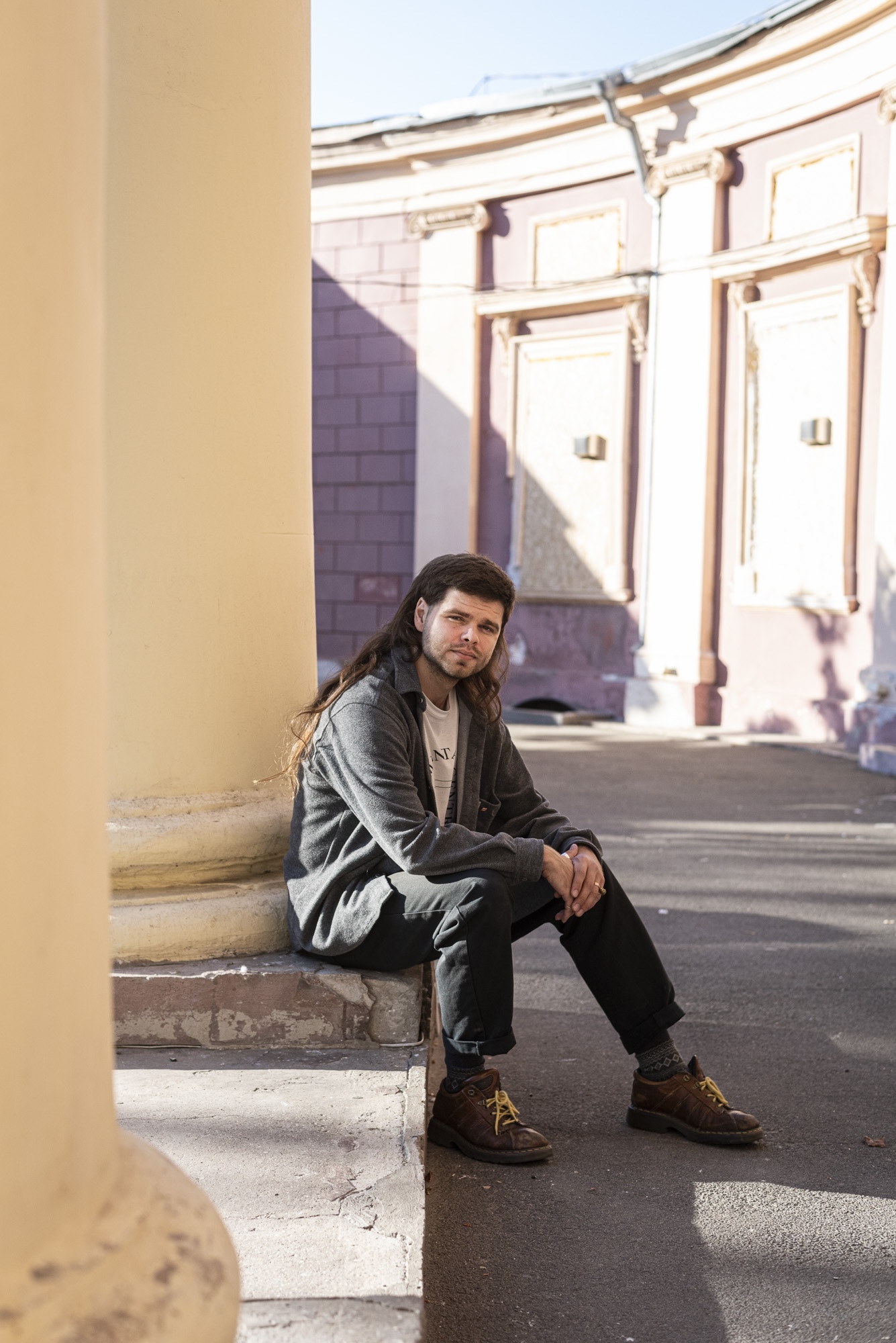
About: Volodimir Chigrinets studied art history at Odesa University before working as a curator at a private museum. Since 2024, he has been a curator at the Odesa National Fine Arts Museum.
Text: Nadin Heinich
Photography: Heinrich Völkel
