In April 2023, the United Nations published a projection indicating that India would surpass China in population by the middle of that year. Since then, India has become the world’s most populous country, with around 1.4 billion inhabitants. Its economy has grown rapidly over the past several years—and continues to do so. What is perhaps most remarkable, however, is that India is seeking to manage this extraordinary dynamism not under the direction of an authoritarian state, in one form or another, but through democratic means. Having gained independence from British colonial rule in 1947, the country has, under its constitution of November 1949, been a parliamentary democracy—the largest in the world. All the more surprising, then, is how little attention India receives in Europe. The entire Indo-Pacific region remains largely below the radar, writes former German ambassador Walter J. Lindner in his book The Old West and the New South: What We Should Learn from India Before It’s Too Late, arguing that this neglect is remarkably short-sighted.
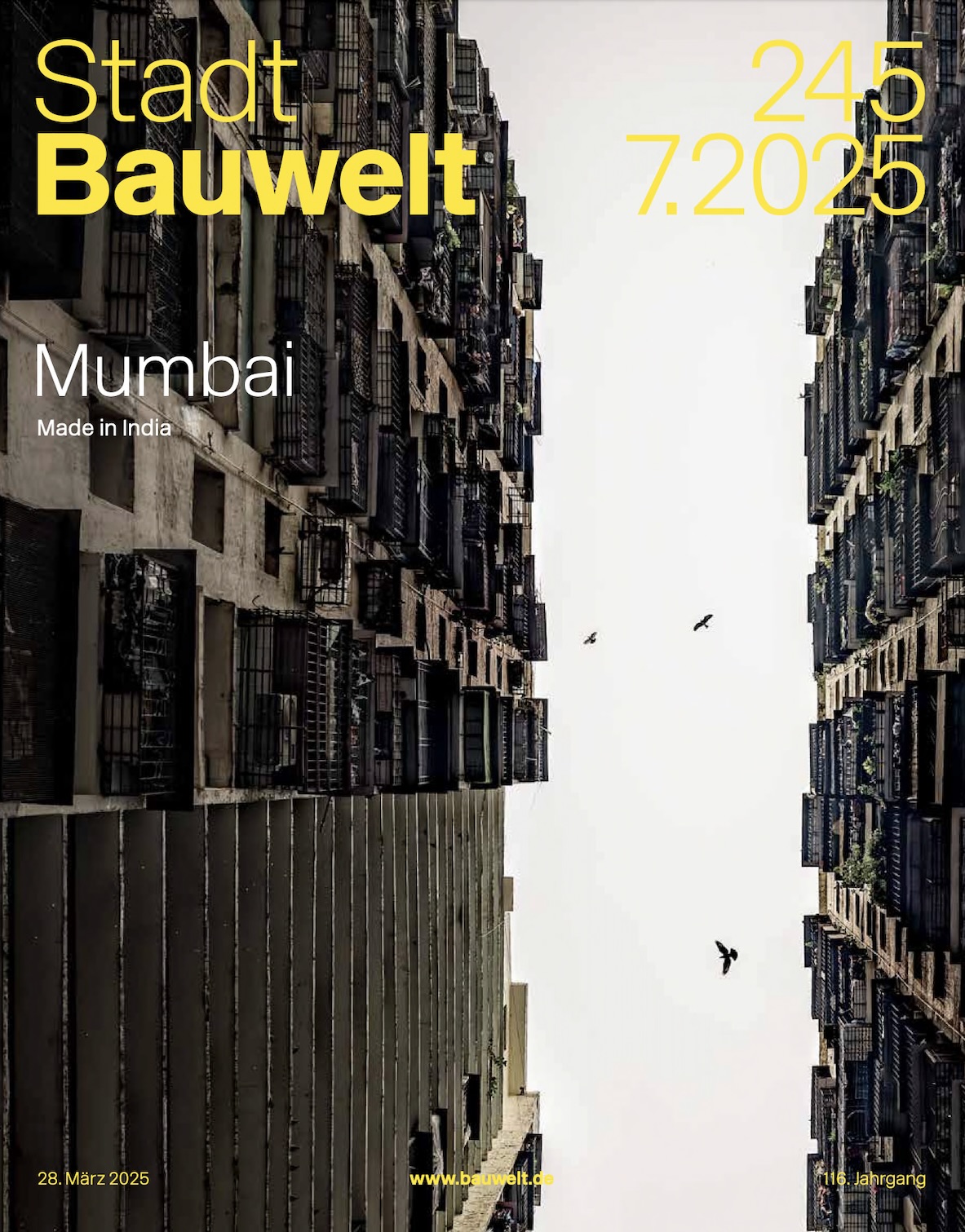
With this issue of Stadtbauwelt, we hope to bring India back onto the radar. For us in prosperous Europe—a continent where we discuss the prospect of post-growth, and where, at least in terms of architecture and urban planning, we often claim that most of the building has already been done—it is of the utmost interest to understand how a world region operating under entirely different economic conditions is responding to the major challenges of our time. And what better place to begin than Mumbai, arguably the most dynamic city in one of the world’s most dynamic countries?
When we began planning this issue, guest editor Nadin Heinich described what makes this metropolis on India’s west coast so compelling:
“Mumbai—an Indian megacity, one of the most densely populated cities in the world; the economic centre of the world’s most populous nation, which also boasts the highest economic growth rate among the G20 countries. Hustle, noise, relentless movement, endless traffic jams, skyscrapers rising ever higher at breathtaking speed, sprawling informal settlements stretching along major roads, temples appearing in between, moments of both chosen and enforced stillness—and, without question, a place where dreams come true.
What visions of the future shape the lives of people in Mumbai? To what extent are social mobility, prosperity, and wealth tied to material possessions, and to what extent to spiritual values? Are there limits to growth? What role do climate change and the finite nature of natural resources play? What does the rapid pace of transformation mean? How is all of this reflected in urban planning? Is Europe—or Germany—a model? And is the building transition we are currently debating relevant for India?”
Nadin Heinich took these questions with her to Mumbai, where she spoke with architects, journalists, urban planners, civic activists, and real estate developers. Their perspectives form the editorial backbone of this issue of Stadtbauwelt. To create its visual framework, we were once again fortunate to work with the renowned photojournalist Sergey Ponomarev, following our Beirut issue last year (Bauwelt 5.2024). Above all through his drone photography—which we have given generous space—he succeeds in capturing Mumbai’s almost unimaginable density and the striking juxtaposition of vastly different scales and realities of urban life that define this extraordinary city.
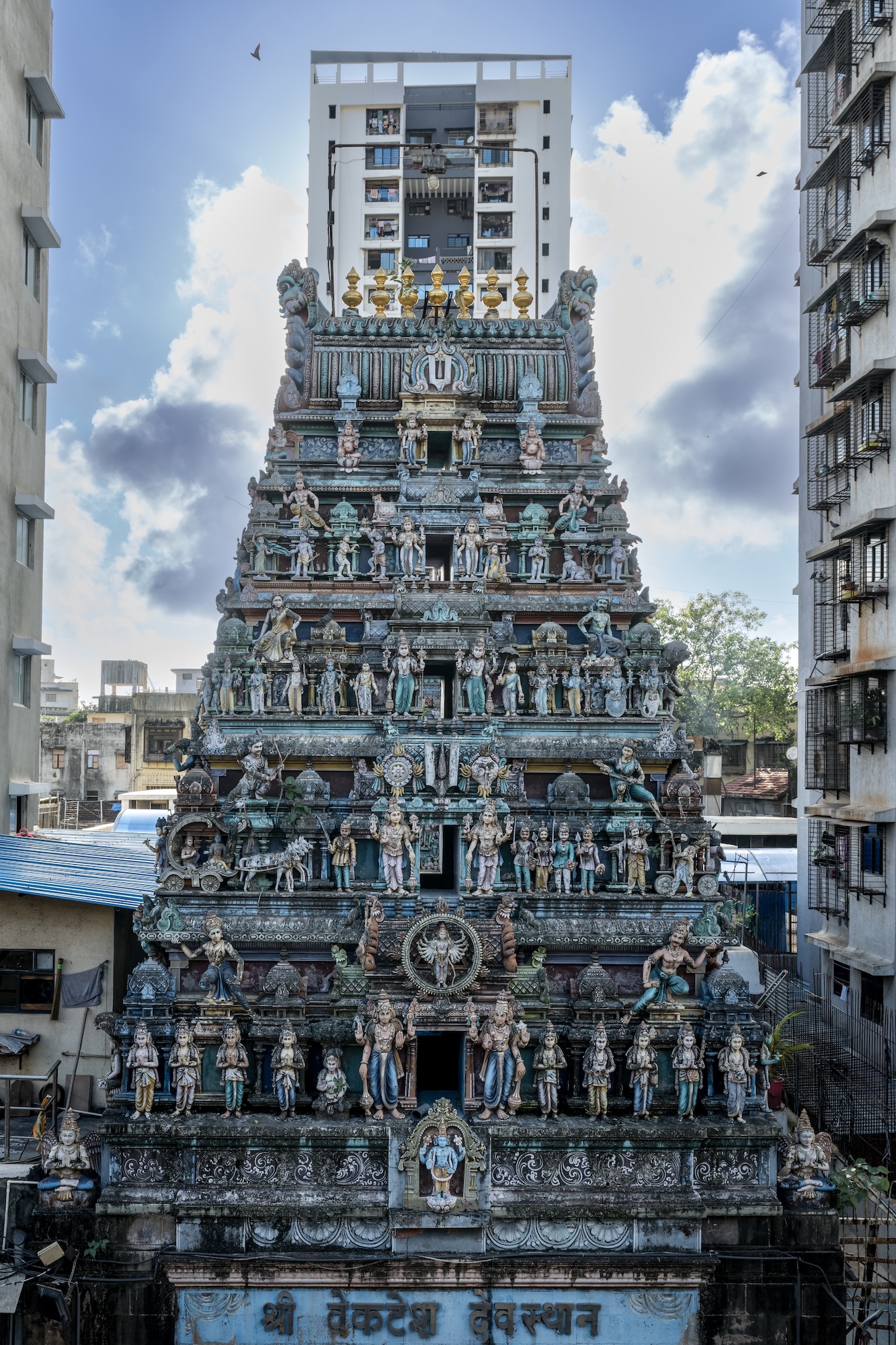
Text: Jan Friedrich (Bauwelt)
Photography: Sergei Ponomarjow
Originally published as the introduction to StadtBauwelt 245 (July 2025).
