How to connect to an uncertain future?
April 15–16, 2026
House of Communication, München
Elizabeth Diller, Carlo Ratti, and Reinier de Graaf in a single morning—just the keynote speakers of this year’s edition of Architecture Matters demonstrated the event’s international caliber. Yet the focus was not on the big names, but on the ideas and positions of arguably the most influential female architect, the director of the 2025 Venice Architecture Biennale, and the partner at OMA and author.
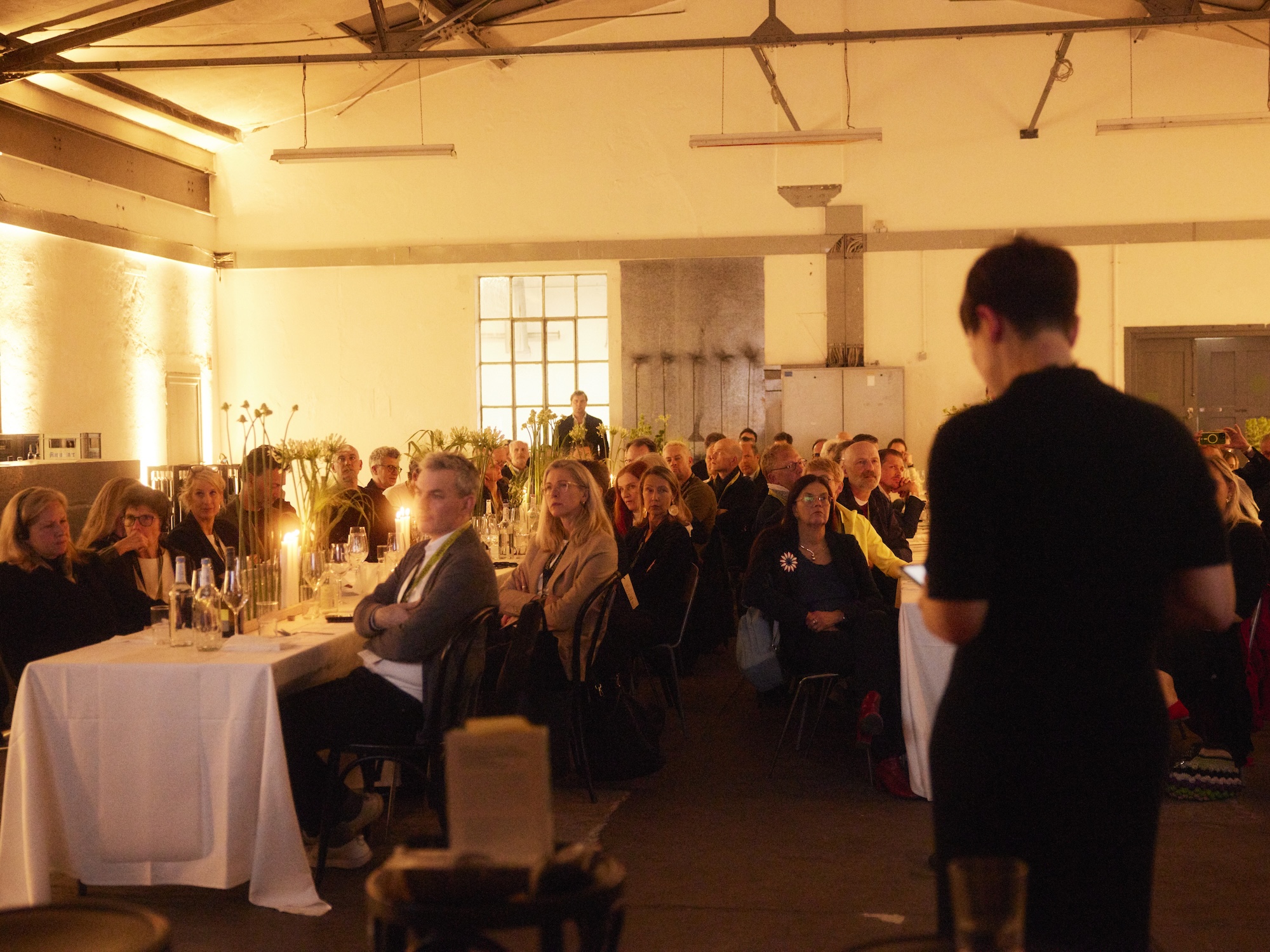
The overall dramaturgy of the program placed the lectures in an initially unsettling context between destruction and new beginnings, despair and hope. On the evening before, migration researcher Gerald Knaus and Austrian military analyst and Ukraine war expert Franz-Stefan Gady accompanied the candlelight dinner with their unflinching talks and discussions on violence in politics and the military, and on the disregard for international rules. For the past three years, a special edition of Bauwelt has been published as a companion to the conference. This year’s issue documents the journey of Nadin Heinich together with photographer Heinrich Völkel/Ostkreuz along Europe’s eastern border—from Narva in Estonia to Odessa in southern Ukraine—from the Cold War to a hot war. In December 2025, they personally experienced one of the most intense drone attacks on the city of Odessa.
What does the threat of war have to do with star architecture, and how does it affect the development of our cities, neighborhoods, and buildings? The central question of Architecture Matters 2026 goes far beyond that. This year’s theme—explored after the keynotes in a plenary discussion with representatives of the real estate industry and in subsequent focus sessions with different emphases in smaller workshops—was: How to connect to an uncertain future?

10 Years of Architecture Matters
Architecture matters! What is taken for granted among fellow architects does not rank highly on the agendas of most decision-makers in our society. Daily news is dominated by other issues: municipal budget deficits, insufficient commitment to housing construction from investors and federal states, and the geopolitical crises of global politics—wars over freedom, resources, and power.
That these major issues have a direct impact on architecture and shape its framework conditions was brought together by Nadine Heinich ten years ago in an event format that remains unique to this day. Architecture Matters continues to be an imperative addressed to politics, the financial sector, the real estate industry, and not least to architects themselves.