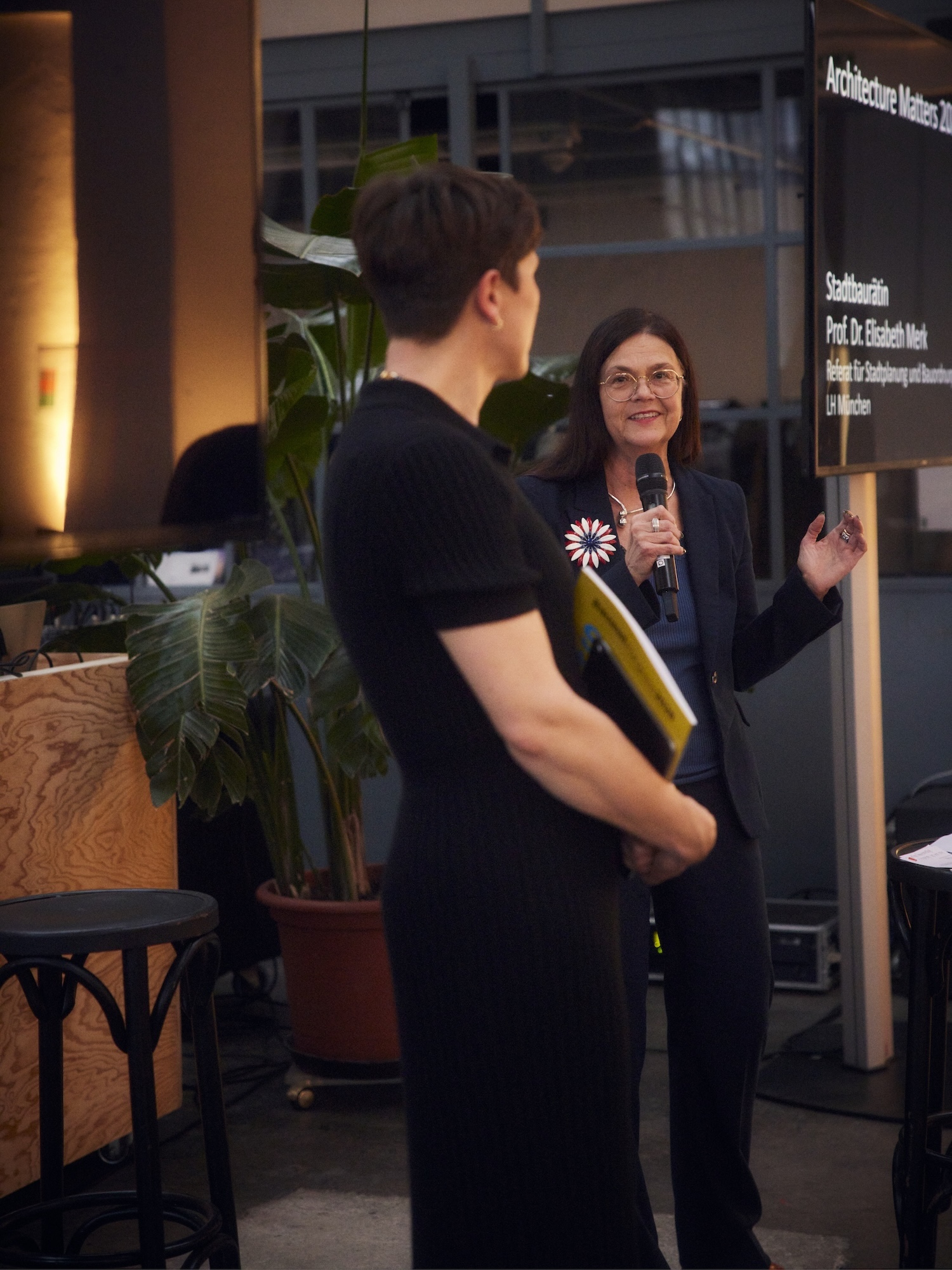
Head of Urban Planning Prof. Dr. Elisabeth Merk recalled many debates from past years—most of them harmonious, but some also highly controversial. She may well have been referring to the widely discussed exchange between Patrick Schumacher of Zaha Hadid Architects and Jörn Walter, former Chief Planning Director of Hamburg, which caused a stir across the architectural community at the time.
Architecture Matters, she noted, is a format where public administration and investors can come together in a spirit of mutual respect. Especially in times of conflict around specific building projects, it is crucial for a city representative to know that, ultimately, all parties share a common overarching goal: creating livable, future-oriented urban neighborhoods.
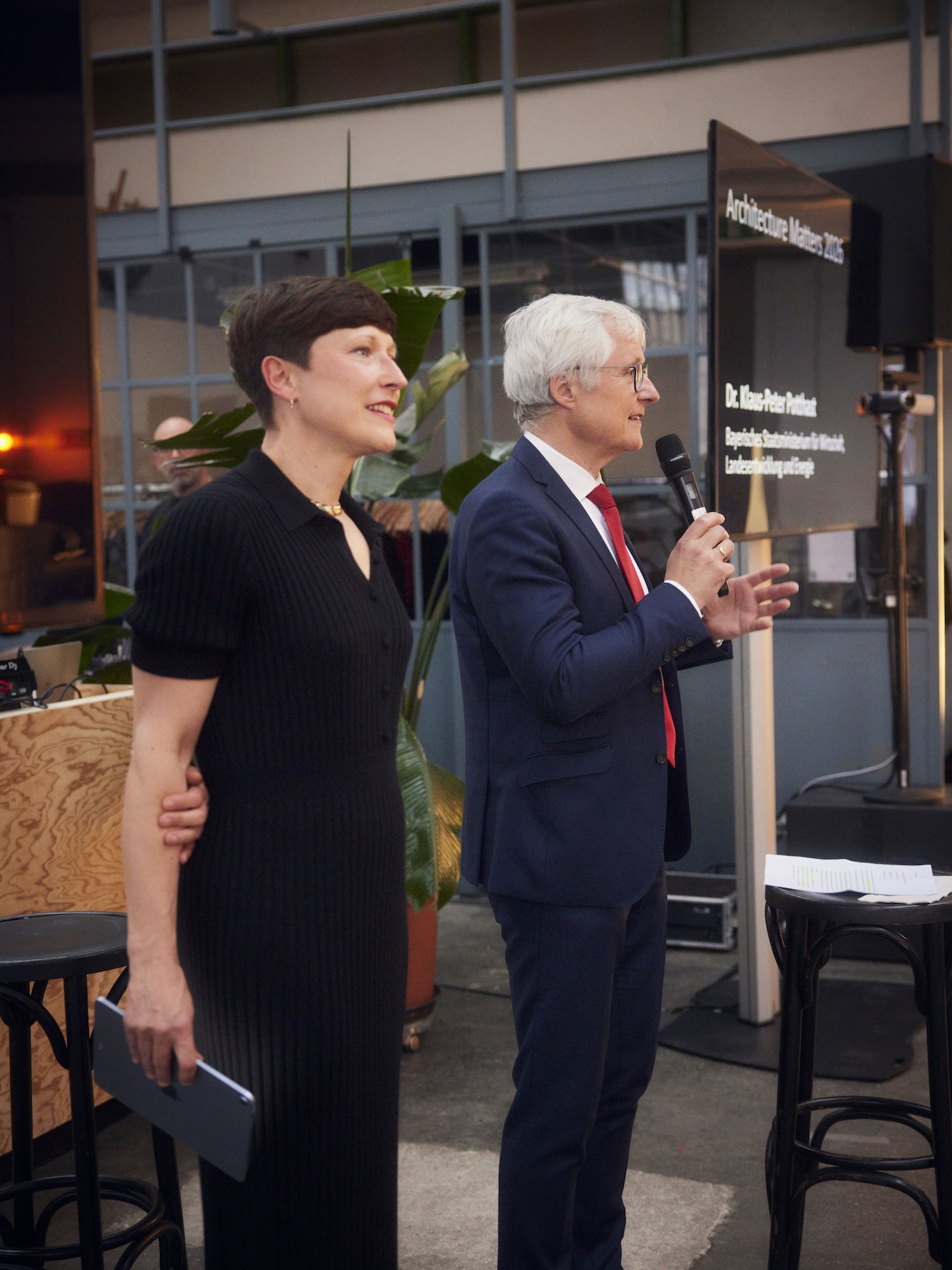
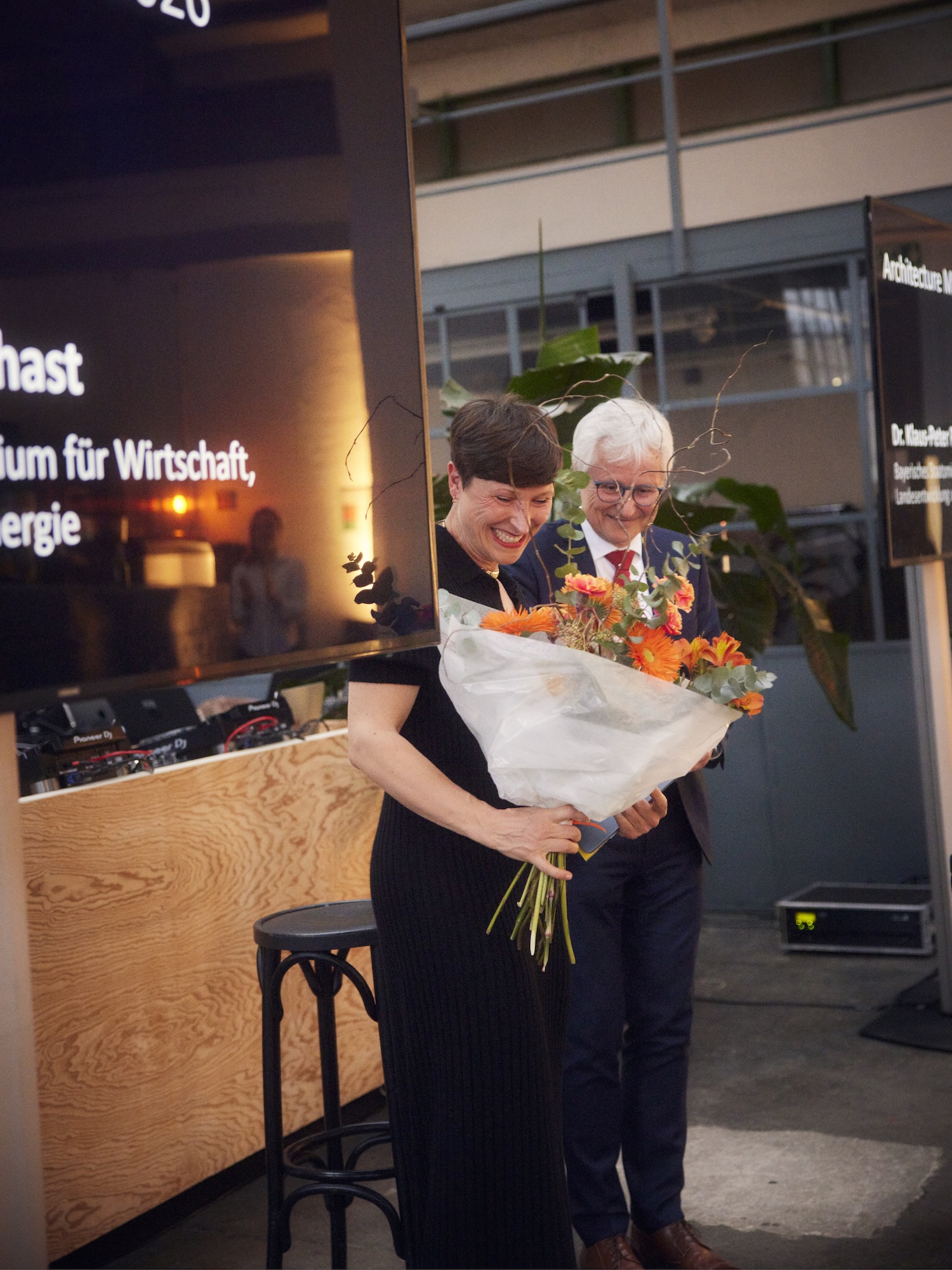
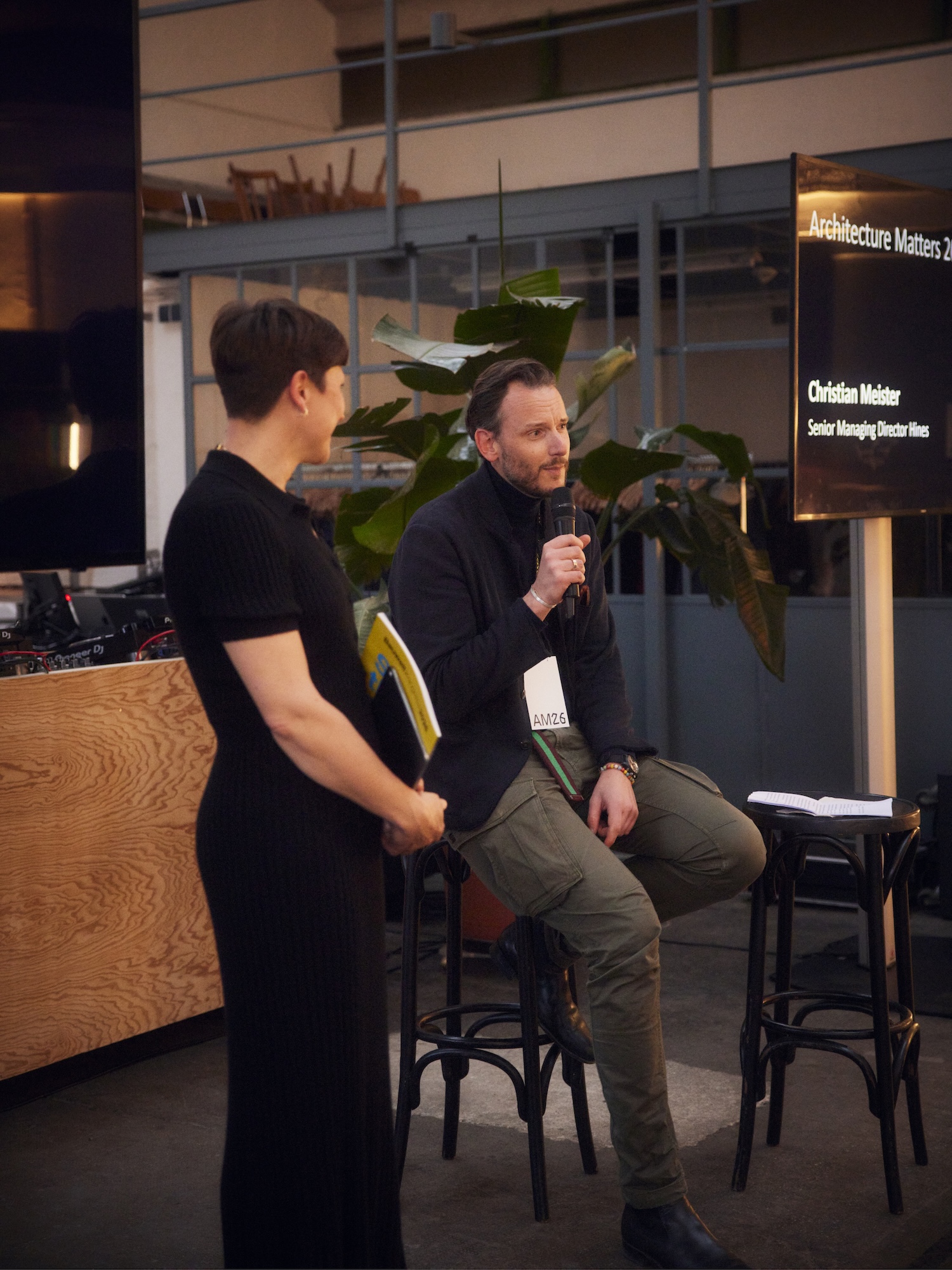
Die Bestätigung folgte prompt von Christian Meister, Senior Managing Director Hines, der erklärte weshalb er sich so leidenschaftlich seit Jahren als Beirat und Sponsor bei Architecture Matters engagiere. Die Fragen der Stadtentwicklung seien so komplex geworden, dass sie nur unter Einbeziehung unterschiedlichster Standpunkte gelöst werden können. Die Veranstaltungen der vergangenen Jahre hätten gezeigt, dass, besonders in den Focus Sessions durch den direkten Diskurs, neue Denkansätze angeregt und der Funke für ganz konkrete Lösungen gezündet wurde. Schließlich ginge es ihm, auch wenn das vielleicht etwas pathetisch klinge, persönlich als Entwicklern nicht nur um Rendite, sondern darum Spuren im Sand der Geschichte zu hinterlassen.
Opening Reception: Input Lectures and Talk
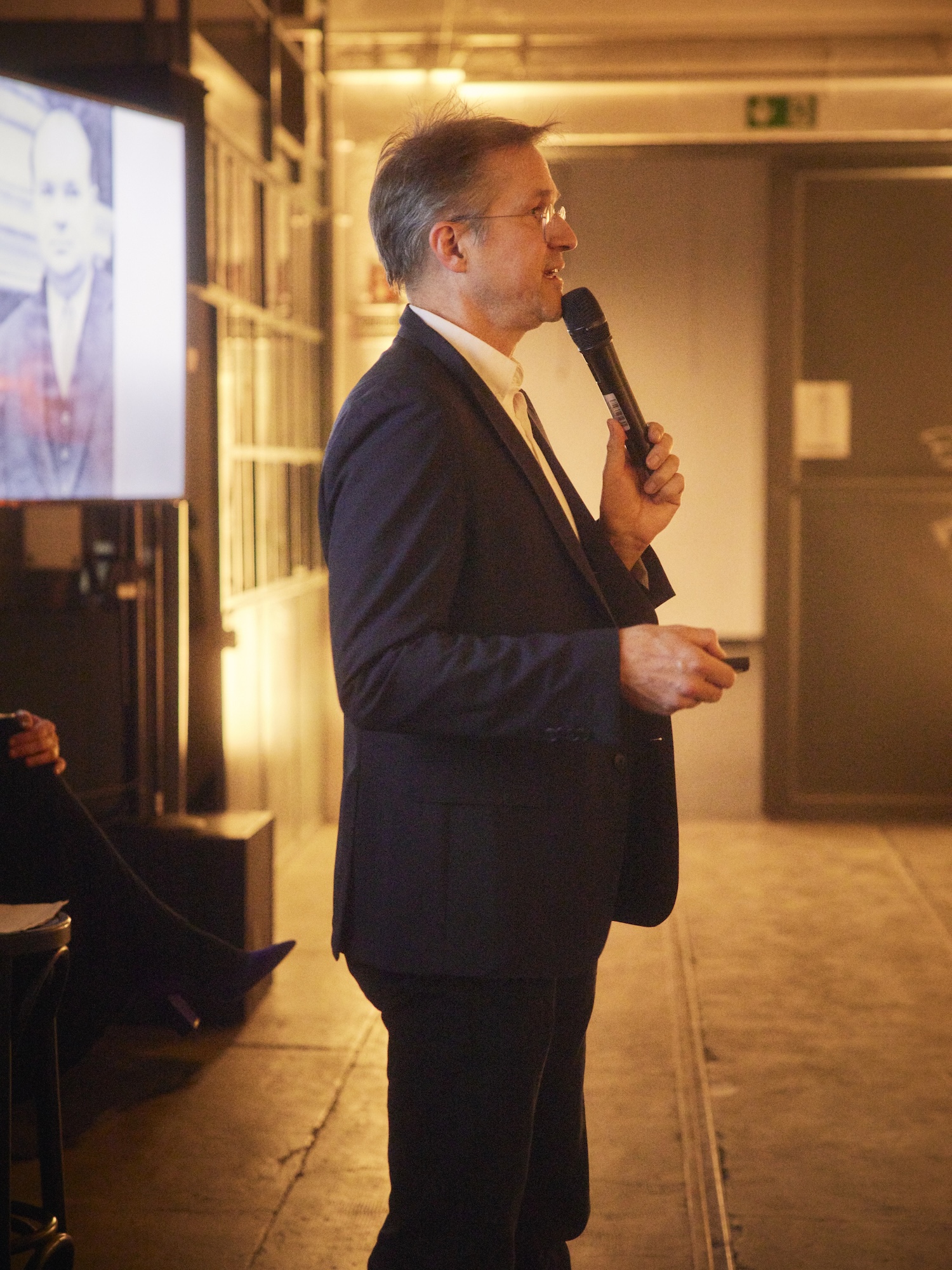
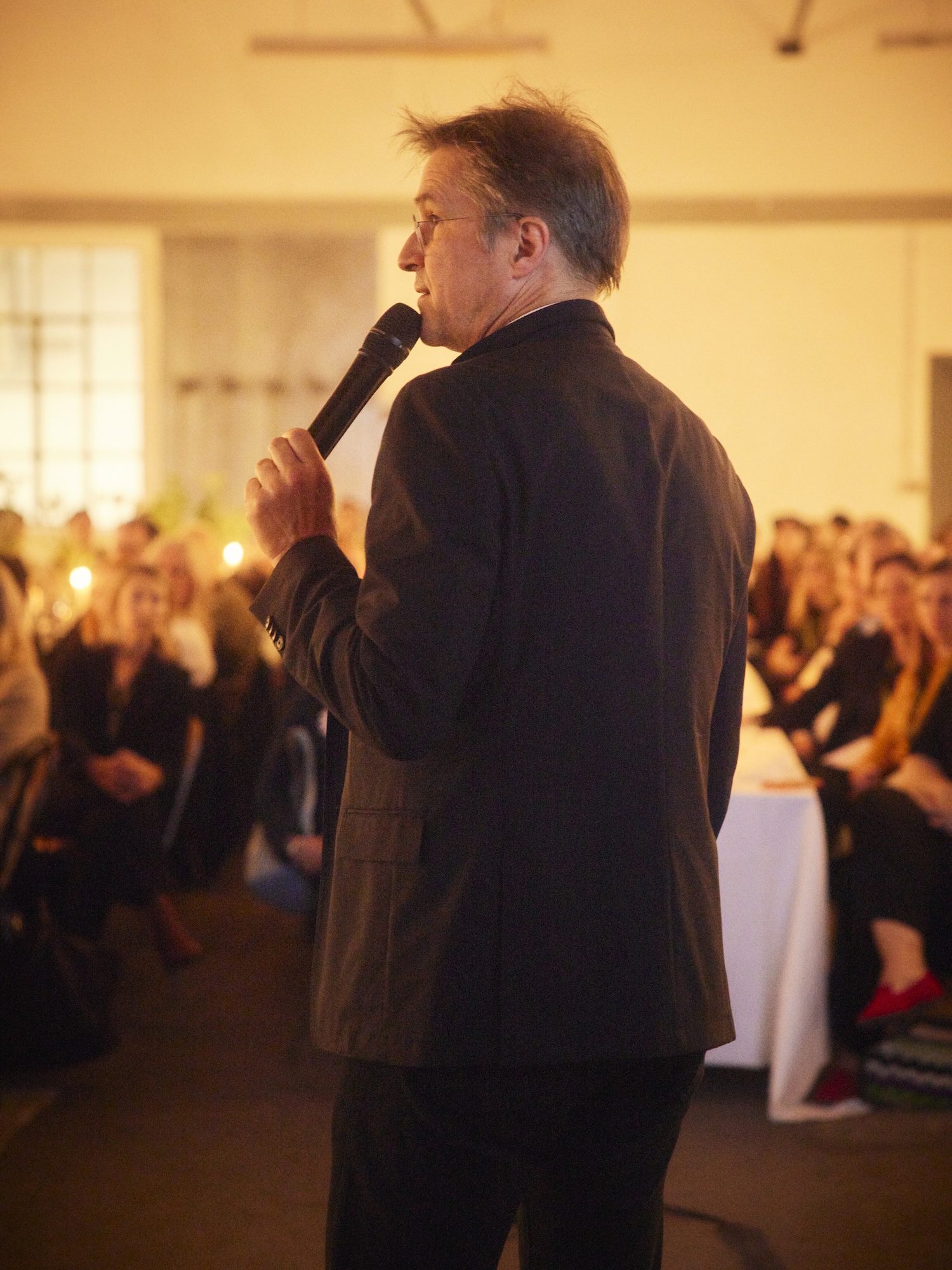
Gerald Knaus’s lecture addressed how increasingly politicians disregard internationally recognized frameworks of diplomacy, democracy, and international law—while also underscoring the vital importance of these very frameworks. His talk focused on both the threats facing Europe and its potential.
Knaus, founding director of the think tank European Stability Initiative (ESI), is an internationally recognized expert on migration, displacement, and human rights. According to Madeleine Albright, his report on the peace process in Bosnia influenced U.S. foreign policy during the Bosnian War. The ESI also provided key foundations for the German-Turkish negotiations during the 2015 refugee crisis.
His lecture was based on his recently published book “Which Europe Do We Need?” and revolved around pressing questions: How can war be prevented? How do we preserve peace? How thin is the ice on which our sense of security rests?
While in cities like Kyiv, drone alarms sound several times a day, urging people to seek shelter, the war has long become part of everyday life. The past winter has taken a severe toll on Ukraine. At the same time, political developments—such as Donald Trump’s threats toward Canada and Greenland—have brought previously unthinkable military defense scenarios involving the United States into public discussion.
After reflecting on the founding generation of the European Union, its development, and its eastward expansion as a success story, Knaus emphasized the importance of a future EU accession for Ukraine. Such a perspective, he argued, is a crucial motivation for the resilience of Ukrainian society. Ultimately, an eastern EU border beyond Ukraine would also serve as a guarantee of security for the West.
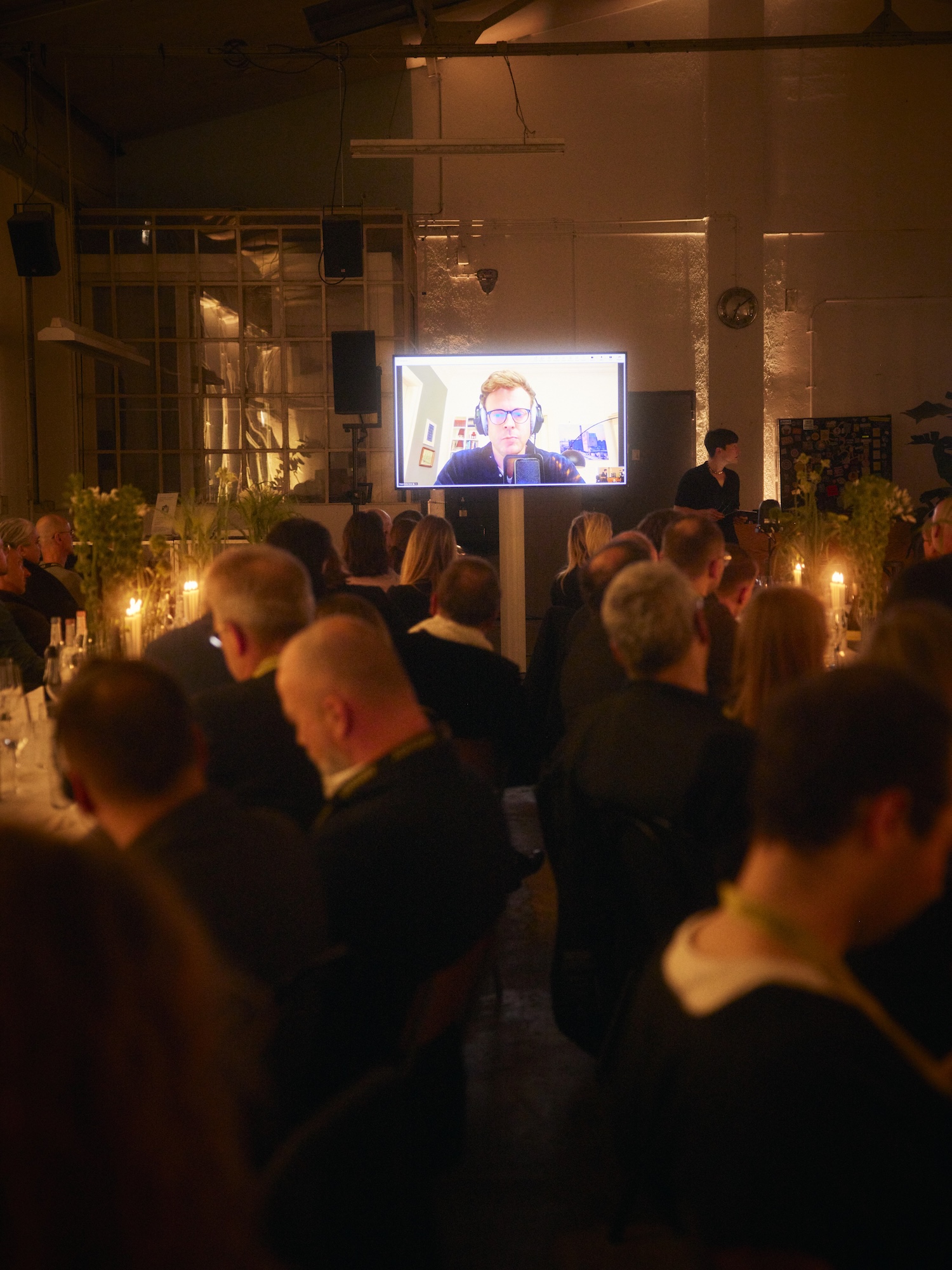
How uncertain everyday life is for civilians and soldiers in Ukraine was conveyed firsthand by military analyst Franz-Stefan Gady in his video talk with Nadin Heinich. Gady regularly travels to the front lines and advises governments and armed forces. Where city walls once provided protection, small units equipped with drones and counter-drone systems now patrol. However, Gady does not yet see robots operating autonomously on the battlefield with the help of AI. In Western Europe, there remains a broad consensus that a human must always be the decision-maker behind any lethal weapon.
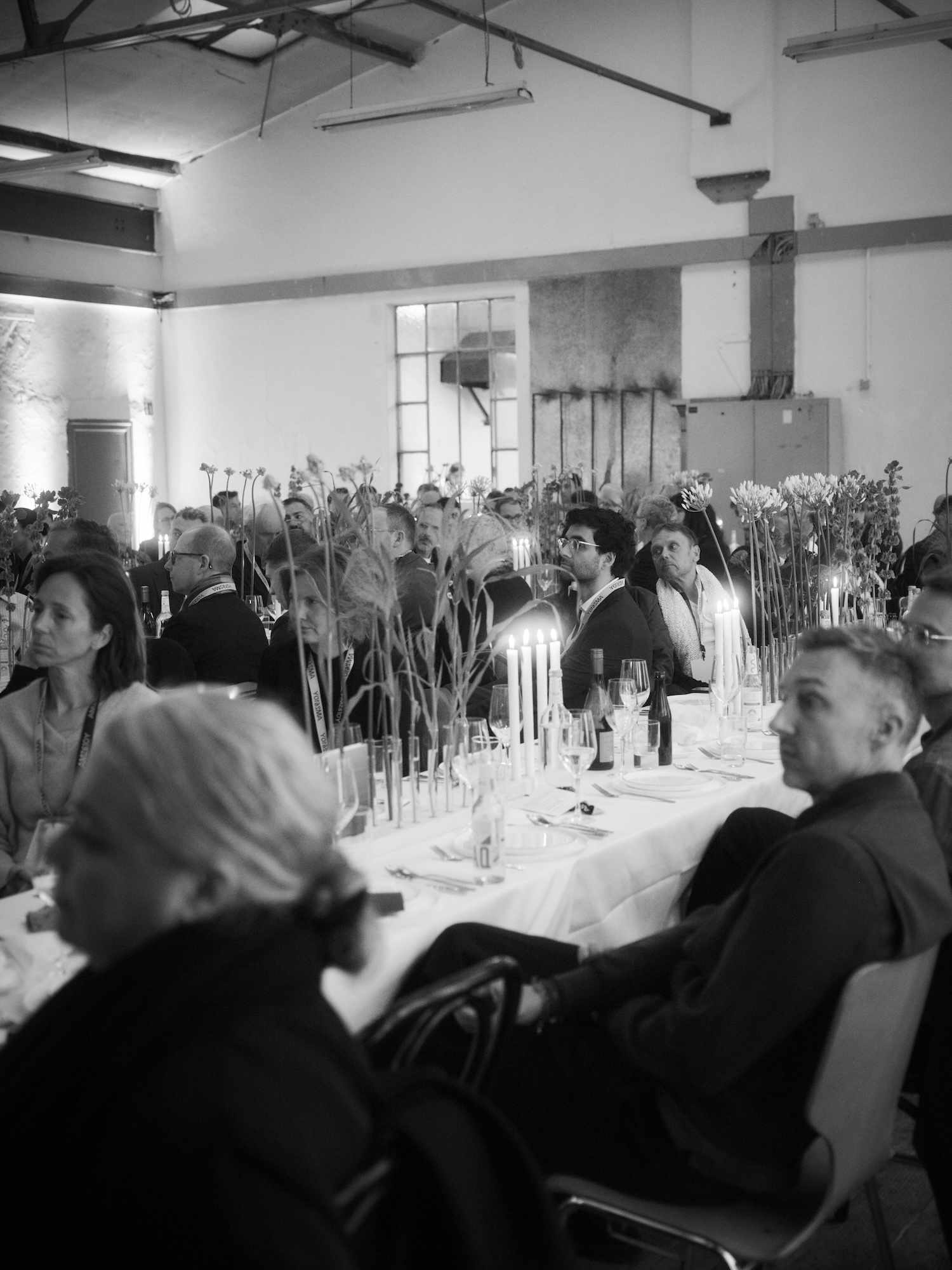
Many of the military realities he described were familiar to the audience from countless media reports. Yet hardly anyone present had ever heard such raw accounts of violence and uncertainty so directly and personally—especially not in the setting of a candlelight dinner, seated at elegantly set tables, enjoying exquisite vegetarian cuisine and fine wines.
“I hope this evening has also given you courage and hasn’t completely taken away your appetite in light of these accounts,” Nadin Heinich remarked as she bid farewell to her guests after an intense round of questions.
Report: Frank Kaltenbach
Photos: Heinrich Völkel & Tanja Kernweiss