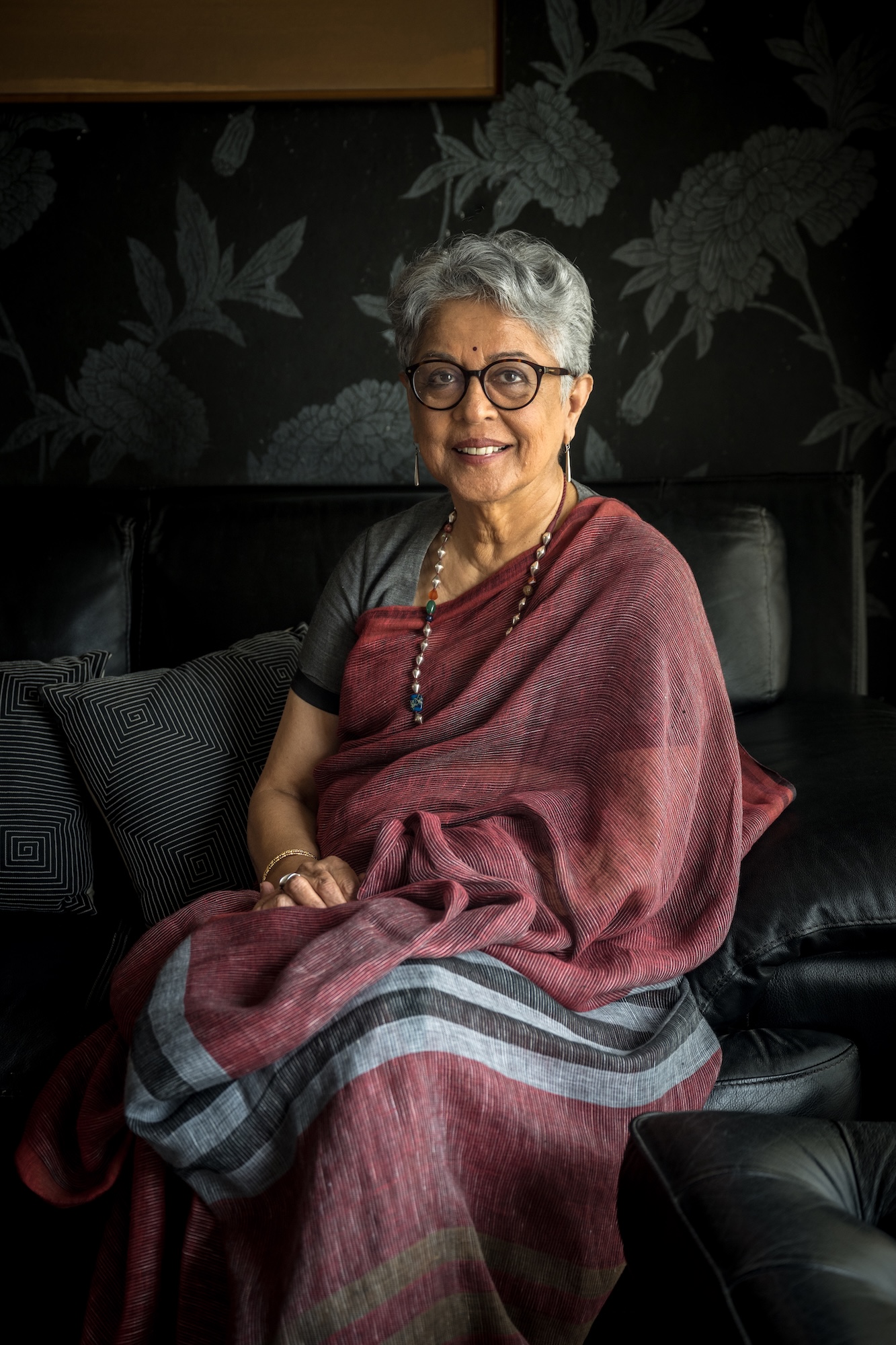
Nadin Heinich: You founded your practice in 1978 and have since completed more than 200 projects—from new buildings, including high-rises, to heritage conservation projects and the reconstruction of a village destroyed by an earthquake. You also restored the famous Rajabai Clock Tower at the University of Mumbai, a landmark dating back to the nineteenth century. How has the profession changed over the years? In Germany, there is an increasing focus on preserving and adapting existing buildings.
Brinda Somaya: It is very difficult to compare India with any other country. My studio has always believed in combining existing buildings with new construction. On the one hand, we have countless everyday buildings that should be preserved and, where appropriate, adapted rather than demolished. On the other hand, we have an extraordinarily rich architectural heritage, ranging from the Bronze Age Indus Valley Civilization, which flourished between 2800 and 1800 BCE in what is now northwestern India, to the Maurya, Gupta, and Chola empires with their remarkable temples in southern India, the Mughal Empire, and, of course, the colonial period. My studio has built projects across the country’s diverse regions—from the Himalayas to the deep south, from the east through central India to the desert.
There is much to preserve and protect. At the same time, we have a vast and still growing population with aspirations to build. We need schools, hospitals, housing, and factories. Conservation alone is not enough. We also have to build new.
I care deeply about sustainability and consider myself a conservationist. What concerns me, however, is the highly selective way the West looks at India, celebrating architects in our part of the world who build only with mud or bamboo. That simply does not work for a billion people. We do not have the land. We also have to build upwards. Our foremost responsibility is to provide for our people—not to create beautiful mud buildings that win praise in Western magazines.
Of course, the way we build matters. But we need to approach the issue realistically. Many Indians today aspire to own a pucca house with a reinforced concrete roof. They do not want a tiled roof that could be blown away in a cyclone. For them, only a concrete roof makes a house feel permanent and secure.
The same applies to energy. We cannot simply abandon coal. India is home to the world’s largest solar park, Bhadla Solar Park in Rajasthan’s Jodhpur district. We are investing in wind power. We also have very strict regulations governing water management, which I believe will become one of India’s greatest challenges in the future. Even a wealthy country like Germany cannot switch overnight to renewable energy alone. By and large, I do not think the West truly understands what is happening here, with only a few exceptions. It is easy to lecture us once you have already gone through every stage of development yourselves.
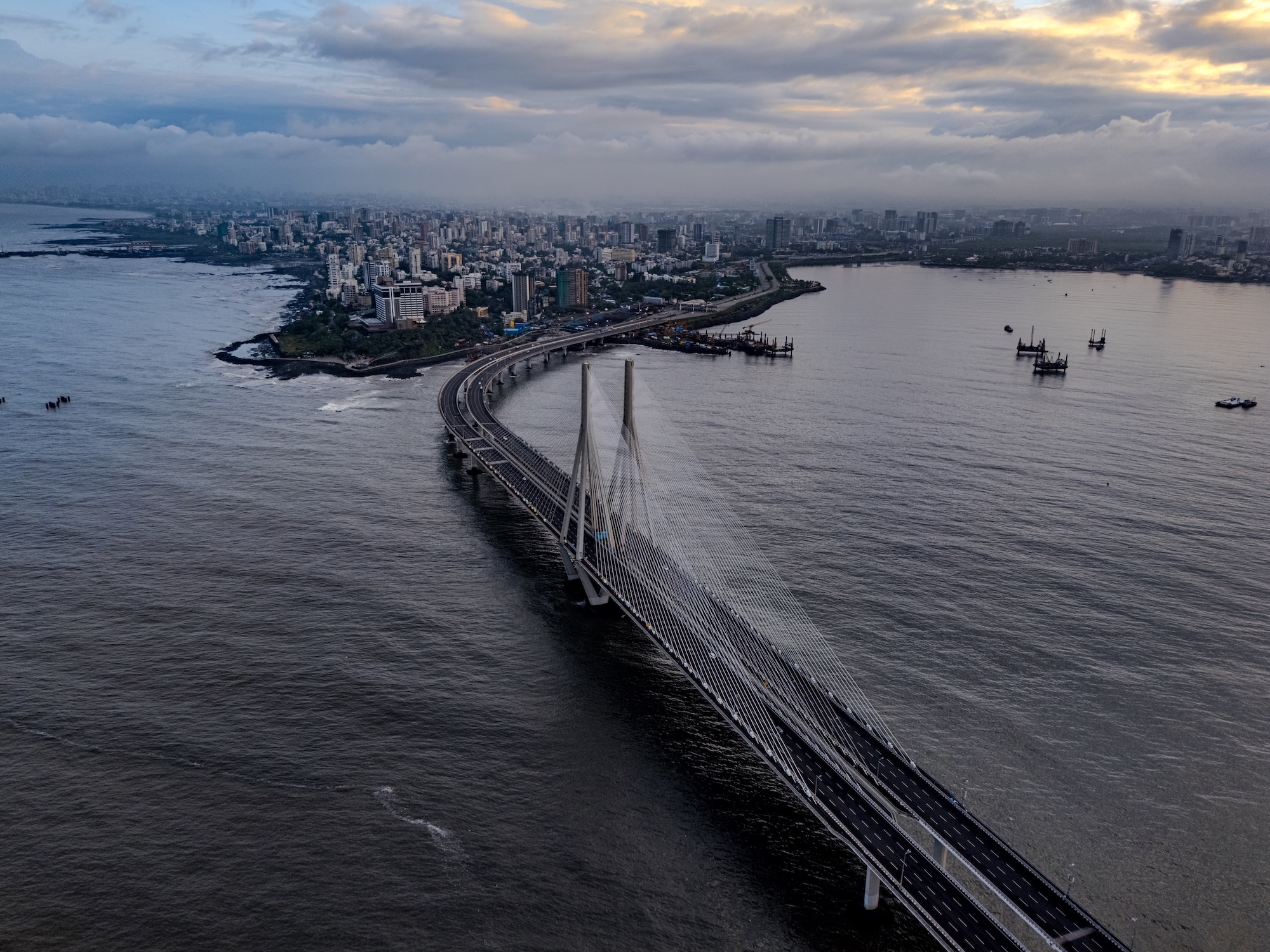
Nadin Heinich: What role does climate change play in Mumbai specifically? The city lies on the Arabian Sea and is surrounded by water on three sides.
Brinda Somaya: Like New York and many other coastal cities, Mumbai is threatened by rising sea levels and flooding. New York has already implemented numerous flood protection measures. We have not done so yet; it is still not at the very top of our list of priorities. But it is something we will have to address much more seriously in the future.
The exceptionally heavy rainfall we have experienced yesterday and today, for example, is clearly linked to climate change. We simply did not have this much rain at this time of year in the past.
Nadin Heinich: Mumbai is changing rapidly. In your view, have living conditions for the people here improved over the past decades?
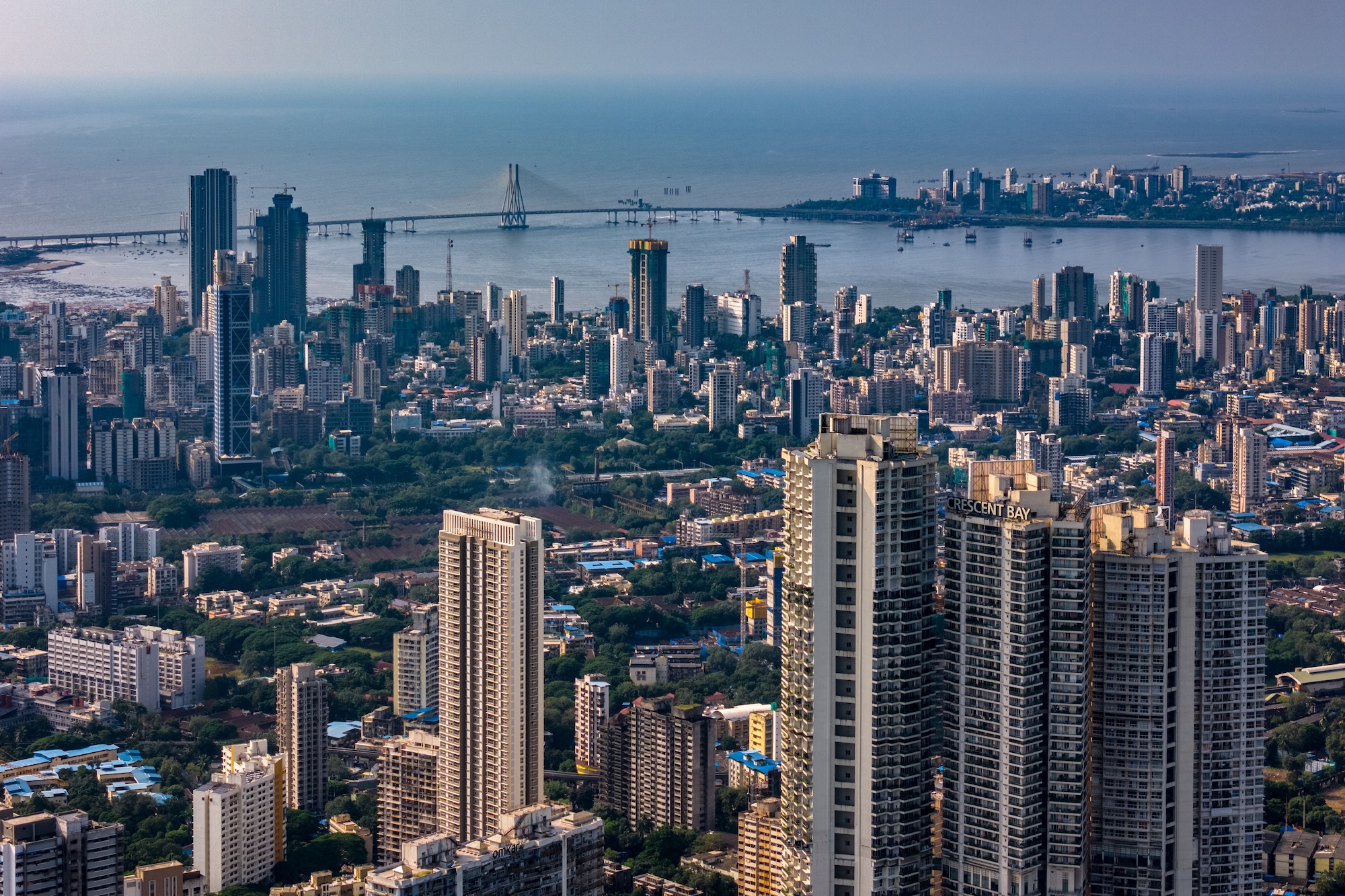
Brinda Somaya: In 1950, Mumbai had just under three million inhabitants. Today, the city is home to around twelve million people, with another twenty-five million living across the wider metropolitan region. Naturally, when a city grows so rapidly and on such a massive scale, problems arise. Over the years, Mumbai has experienced several waves of migration, including construction workers who quite literally helped build the city. Unfortunately, adequate housing could not be provided, which led to the emergence of the slums.
And yet Mumbai has always been a city of hope and opportunity because it offers jobs. Even today, it attracts people from all walks of life. They are willing to endure tremendous hardship in pursuit of a better future. It is a difficult city for poor people, but it also offers them the possibility of improving their standard of living over time.
Nadin Heinich: I’ve often heard that Mumbai’s architectural heyday was the Art Deco period, especially during the 1930s and 1940s, and that from the 1980s onward the city became increasingly shaped by private real estate developers.
Brinda Somaya: There is no doubt that Mumbai’s real estate market has taken away much of what people like us valued: the beautiful old buildings, the sense of place created by lower-rise structures, and the carefully balanced proportions of Art Deco architecture.
Today, redevelopment has become highly controversial. The floor space index (FSI) has been steadily increased over the past few years. Land in Mumbai is scarce and expensive. Developers are building quickly and ever higher, with little regard for infrastructure, water and electricity supply, or the capacity of the roads. And this has little to do with the actual condition of a building. Even people living in perfectly good houses want to redevelop because it allows them to gain additional floor area. Developers’ offers are so lucrative that many people simply cannot resist. The desire for ever more has prevailed. And this is not limited to professional real estate companies. Private homeowners are also embracing redevelopment. They hire an architect, demolish their house, and rebuild it larger than before.
At the same time, the real estate market is now dominated by the concept of gated residential communities, which did not exist in the past. Our residential buildings used to open directly onto the street, with shops typically occupying the ground floor. The new gated housing complexes are self-contained. The first six or seven floors are used for parking, leaving no street life at all. They have swimming pools, bars, restaurants—you never have to leave the complex. Initially, these developments were designed for the upper middle class. Today, they are also being built in the more affordable suburbs. Many people aspire to this lifestyle.
Nadin Heinich: Does “redevelopment” in Mumbai now essentially always mean demolition and rebuilding? Is adaptive reuse or the continued development of existing buildings almost nonexistent? Even if a building is only ten years old—is there effectively no age threshold?
Brinda Somaya: Continuing to develop and work with existing buildings was always part of my philosophy. Now that approach has disappeared.
Nadin Heinich: Since when has that been the case?
Brinda Somaya: It has changed over the past twenty years. There are still companies today that value historic buildings. In Mumbai’s southern districts, such as Colaba and Fort, many luxury brands like Hermès and Galeries Lafayette have opened their stores in restored heritage buildings. So there is also a process of gentrification taking place. In addition, Mumbai is home to many billionaires who buy and restore old houses. Beyond that, however, no developer is going to save an “ordinary” building for the sake of sustainability. They will demolish it and build as high as they possibly can.
Do you know the story of Mumbai’s former cotton mill district? The neighborhood of Lower Parel was historically known for its textile mills. It was once the heart of Mumbai’s cotton industry and home to numerous spinning mills, which formed a major part of the city’s economy. Their decline began in the late 1970s and throughout the 1980s, resulting in massive job losses and large tracts of abandoned industrial land.
Because the individual mill sites were directly adjacent to one another, Charles Correa—one of the key figures of modern Indian architecture—proposed a master plan to the owners: “Let’s treat the entire area as a single entity. One-third should be given to private developers, one-third turned into a public park, and one-third used to build housing for the former mill workers.”
The owners resisted the proposal. They wanted to sell their plots individually to developers for the highest possible price. The dispute ended up before the Supreme Court. We—and by we I mean the architects who believed in Correa’s vision—lost. That is why the former mill district is so fragmented today, without a coherent network of public spaces. Some of the old factories, now in ruins, are still standing because of ongoing legal disputes. This development became emblematic of Mumbai’s subsequent urban transformation.
Even so, I remain convinced that, as architects, we have to engage with developers and help them develop a sense of responsibility toward the city. For the World Towers in Worli, which we designed for the Lodha Group, a public street crossed the site. We advised Abhishek Lodha to preserve that street rather than cutting people off. He retained the road, created a public park on one side, and built the residential towers on the other. That site, too, had once been occupied by a cotton mill.
Nadin Heinich: You have always been a strong advocate for women. Were there particular experiences that shaped this commitment? Did the city of Mumbai play a role in that?
Brinda Somaya: I founded my practice in the late 1970s, first together with my sister and later on my own. At the time, very few women established their own architectural offices. Many worked alongside their husbands, fathers, or other partners. Being independent of a man in one’s immediate professional environment was unusual. I was deeply passionate about what I did. Mumbai was a remarkably progressive city. People were willing to entrust a young woman with important commissions, and for that I am grateful to Mumbai. I don’t believe that would have been possible in any other city in India.
And yes, there were several experiences that motivated me to support women. Early in my career, I was nine months pregnant. It was a Thursday, and my due date was Saturday. Yet I still had to climb onto the roof of a building under construction. My mother was furious with me, so she insisted on accompanying me to the site. At that time, many women worked in construction, performing physically demanding jobs. When I stood on that roof, so many of those women looked at me with extraordinary compassion. In that moment, I decided I had to do something for them—not only for women architects, but also for women working on construction sites. From then on, every one of our construction sites included a toilet for women, as well as electricity and washing facilities.
Separately, in 2000, I decided to organize a conference for women architects from South Asia—women from India, Pakistan, Bangladesh, and Sri Lanka who ran their own practices but remained largely invisible. My first attempt, back in 1990, had received very few responses to my invitations. Ten years later, the response was overwhelming. So much had changed. Then, in 2020, my daughter and I organized Women in Design. We broadened the scope beyond architecture, inviting women from journalism and photography as well. It was a wonderful conference.
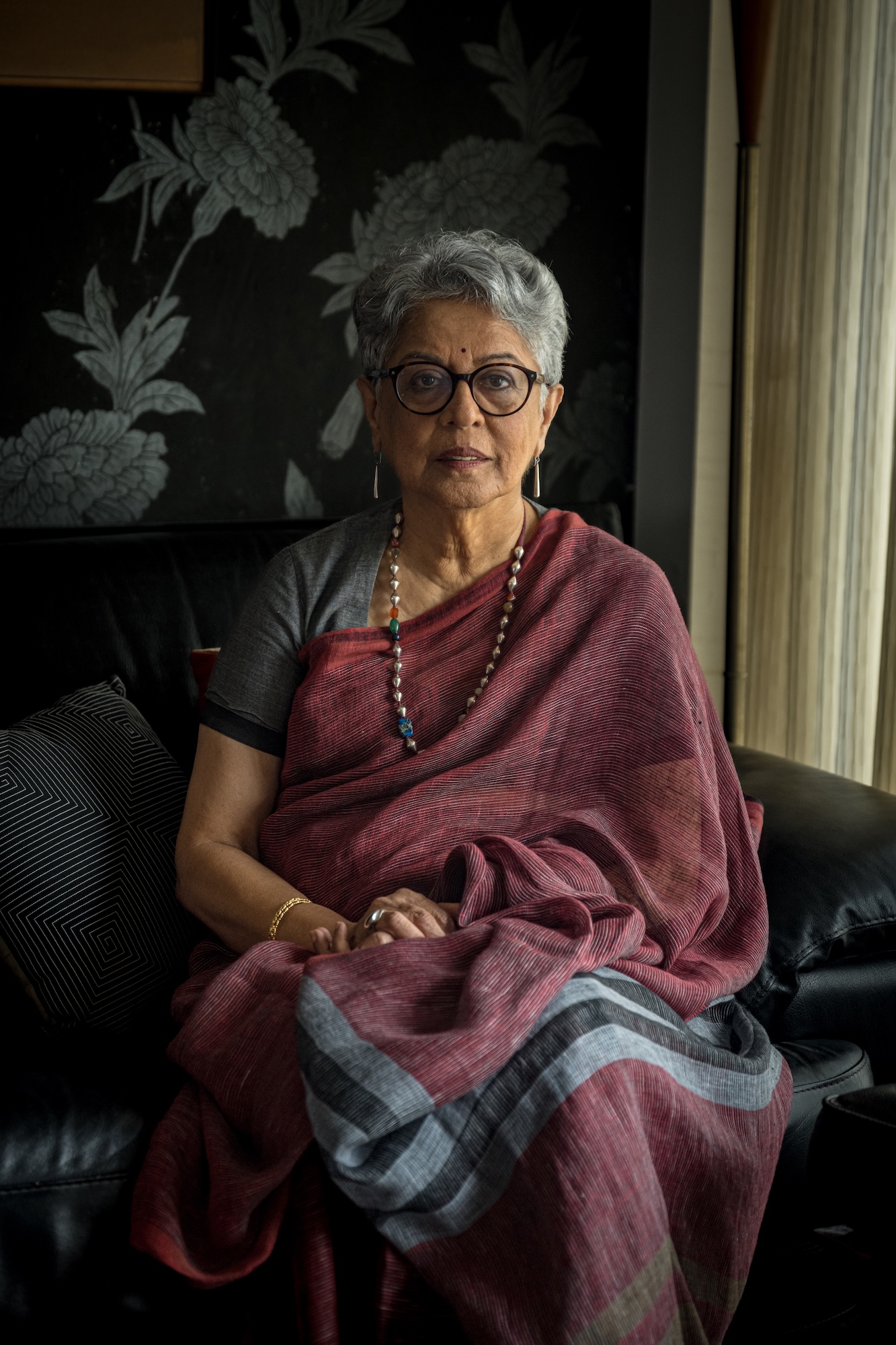
About: Brinda Somaya is an architect, planner, educator, and conservation architect. In 1978, she founded Somaya and Kalappa Consultants in Mumbai. She is a founding member and trustee of the HECAR Foundation, which is dedicated to heritage, education, and conservation, and which organized South Asia’s first Women in Architecture conference and exhibition in 2000. In 2004, she received the UNESCO Asia-Pacific Heritage Award for the restoration of Mumbai’s eighteenth-century St. Thomas Cathedral. Brinda Somaya studied at the Sir J.J. College of Architecture in Mumbai and at Smith College in Northampton, Massachusetts. In 2012, Smith College awarded her an honorary doctorate.
Text: Nadin Heinich
Photographs: Sergei Ponomarev
