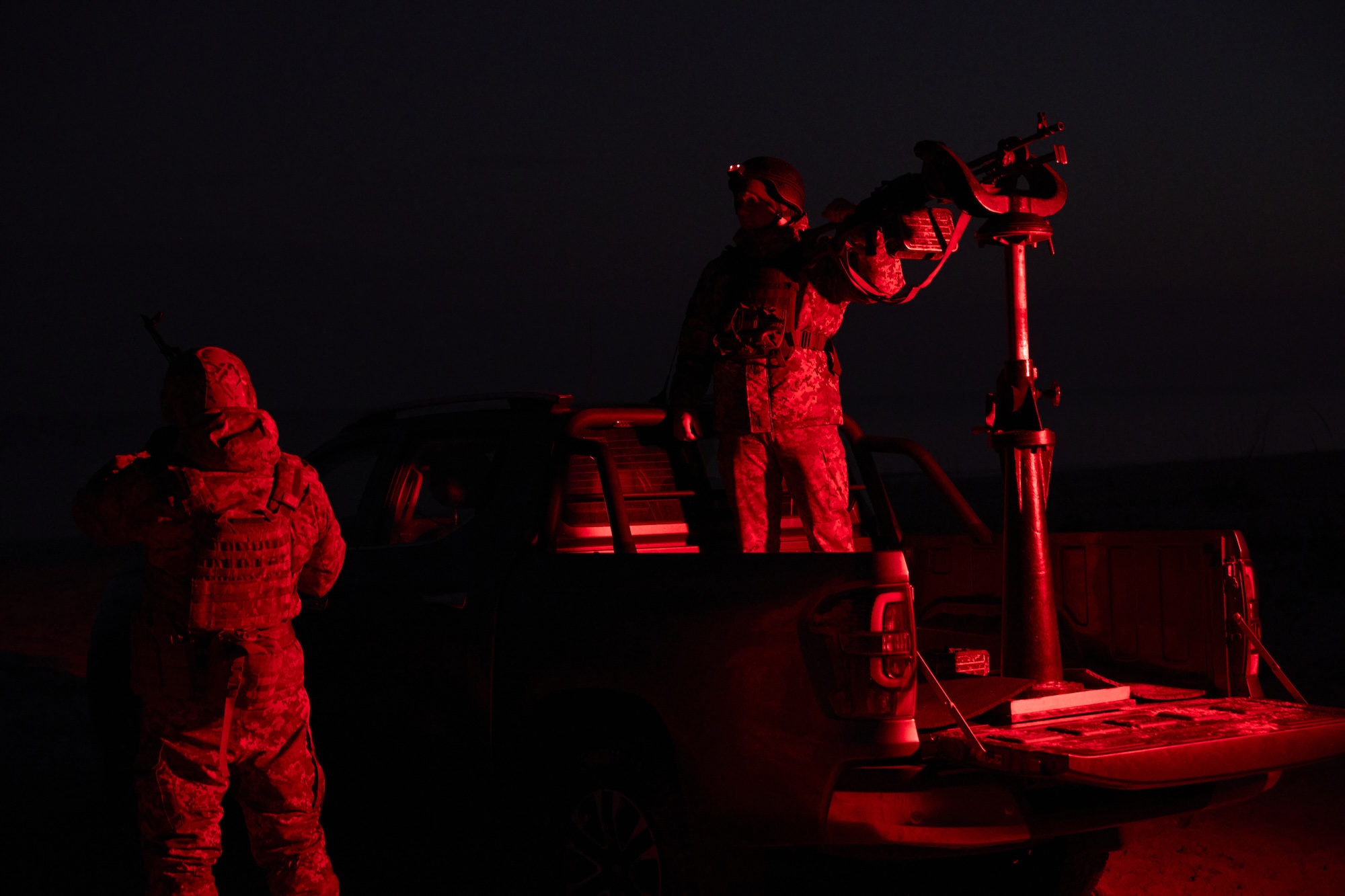
Nadin Heinich: Odesa is neither a frontline city in the traditional sense nor a safe metropolis. How would you describe its military status—and where is the city most vulnerable?
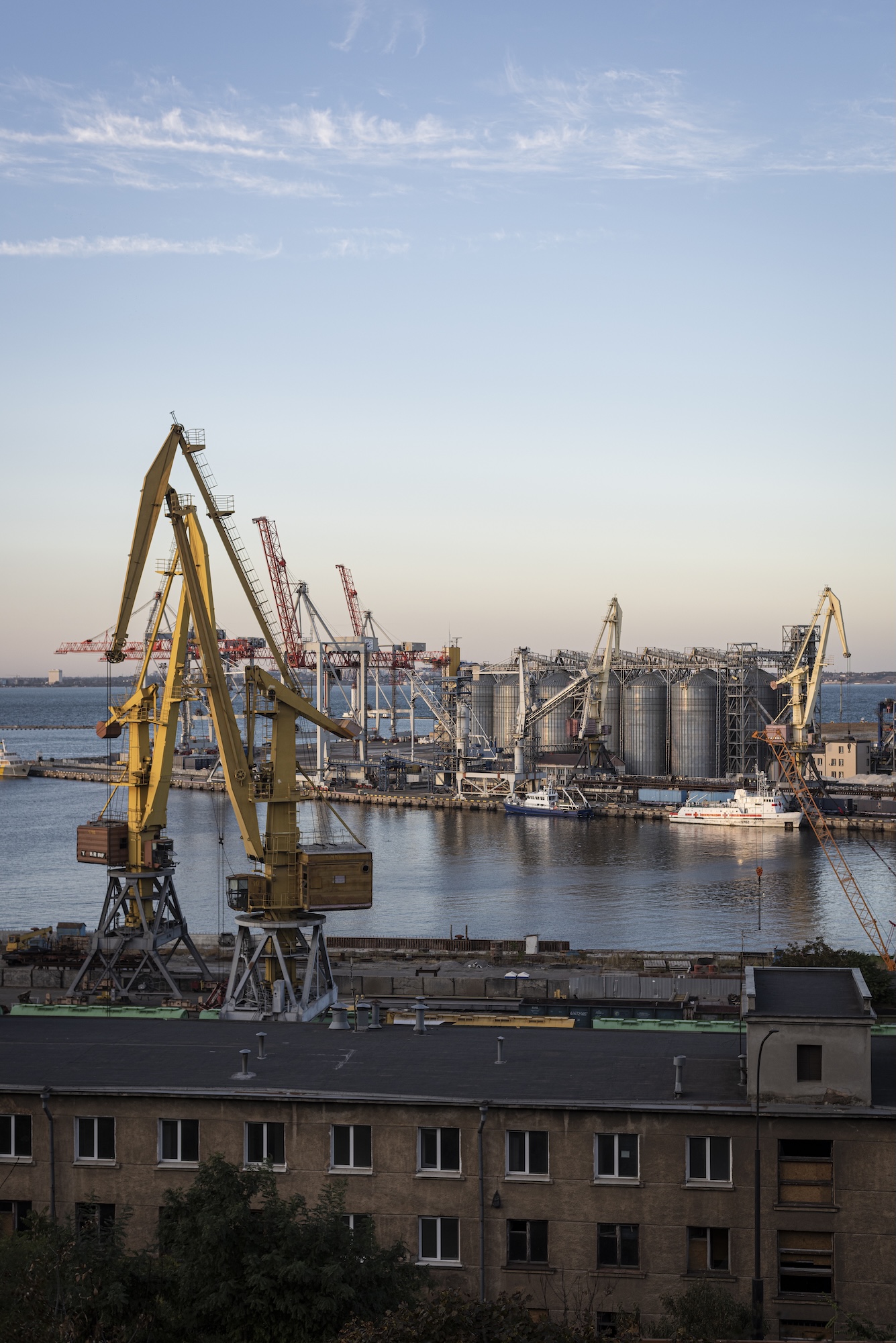
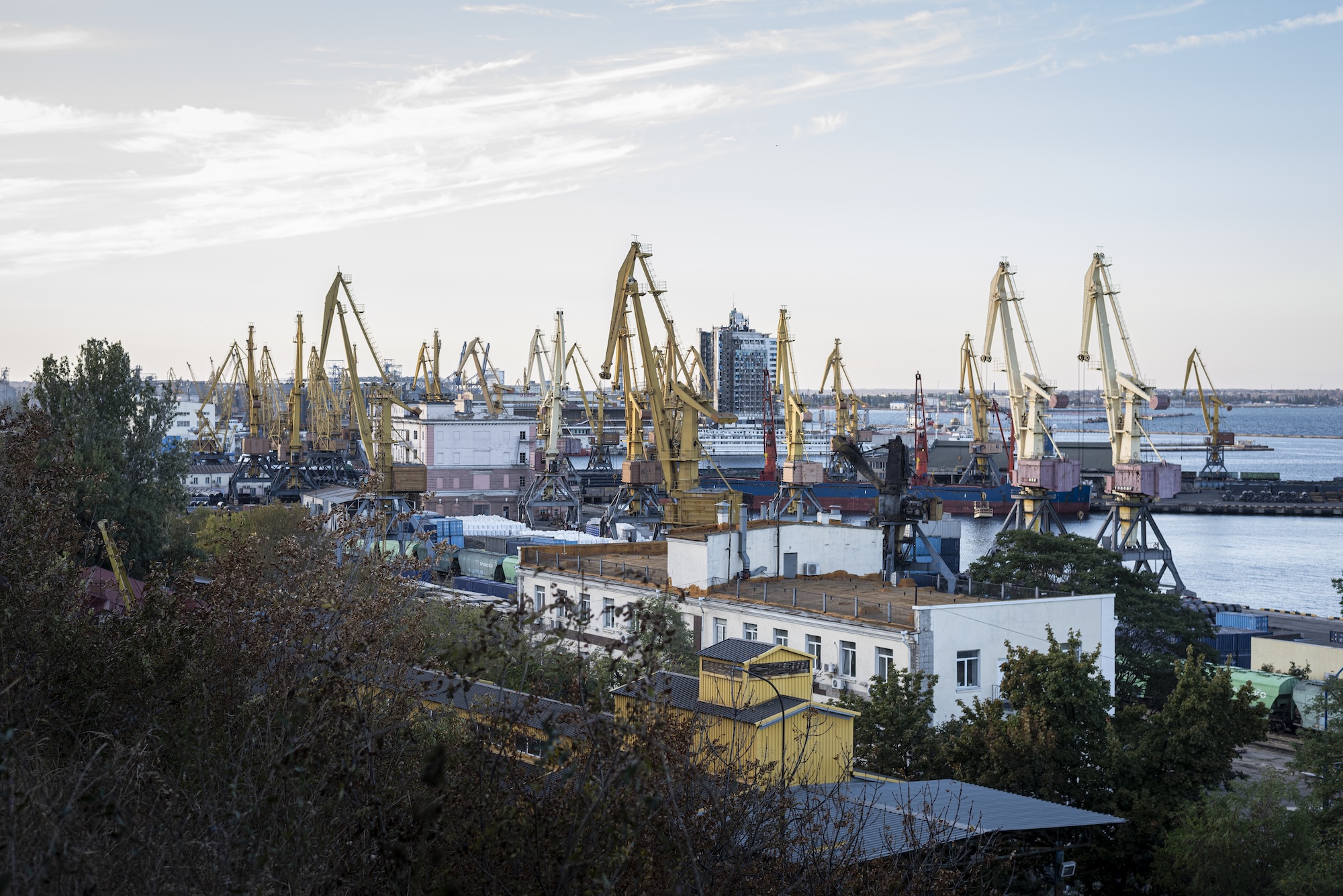
Oleksandr Kovalenko: Odesa is Ukraine’s maritime gateway. The port cluster of Odesa, Chornomorsk and Pivdennyi is vital to the country’s trade and exports. In 2022, Odesa was a key objective for Russia: whoever controls the coast cuts Ukraine off from the sea.
From the very beginning, the city came under pressure from two directions: the ground offensive from the south and, at the same time, the threat of an amphibious landing. During the first weeks of the war, Russia pursued two primary objectives: to weaken our air defence and neutralise our coastal defence, particularly the Neptune anti-ship missile system.
Once it became clear that Odesa could not be captured “quickly,” Snake Island gained enormous strategic importance. From there, it is possible to control traffic in the north-western Black Sea and, consequently, access to Odesa and its shipping routes. Russia held the island in order to support its naval blockade.
Russia’s withdrawal from Snake Island on 30 June 2022 therefore marked an important turning point. Another was the sinking of the Russian guided missile cruiser Moskva, the flagship of the Black Sea Fleet, on 14 April 2022. After the Moskva was struck by Neptune anti-ship missiles, the Russian navy operated far more cautiously near Ukraine’s coastline.
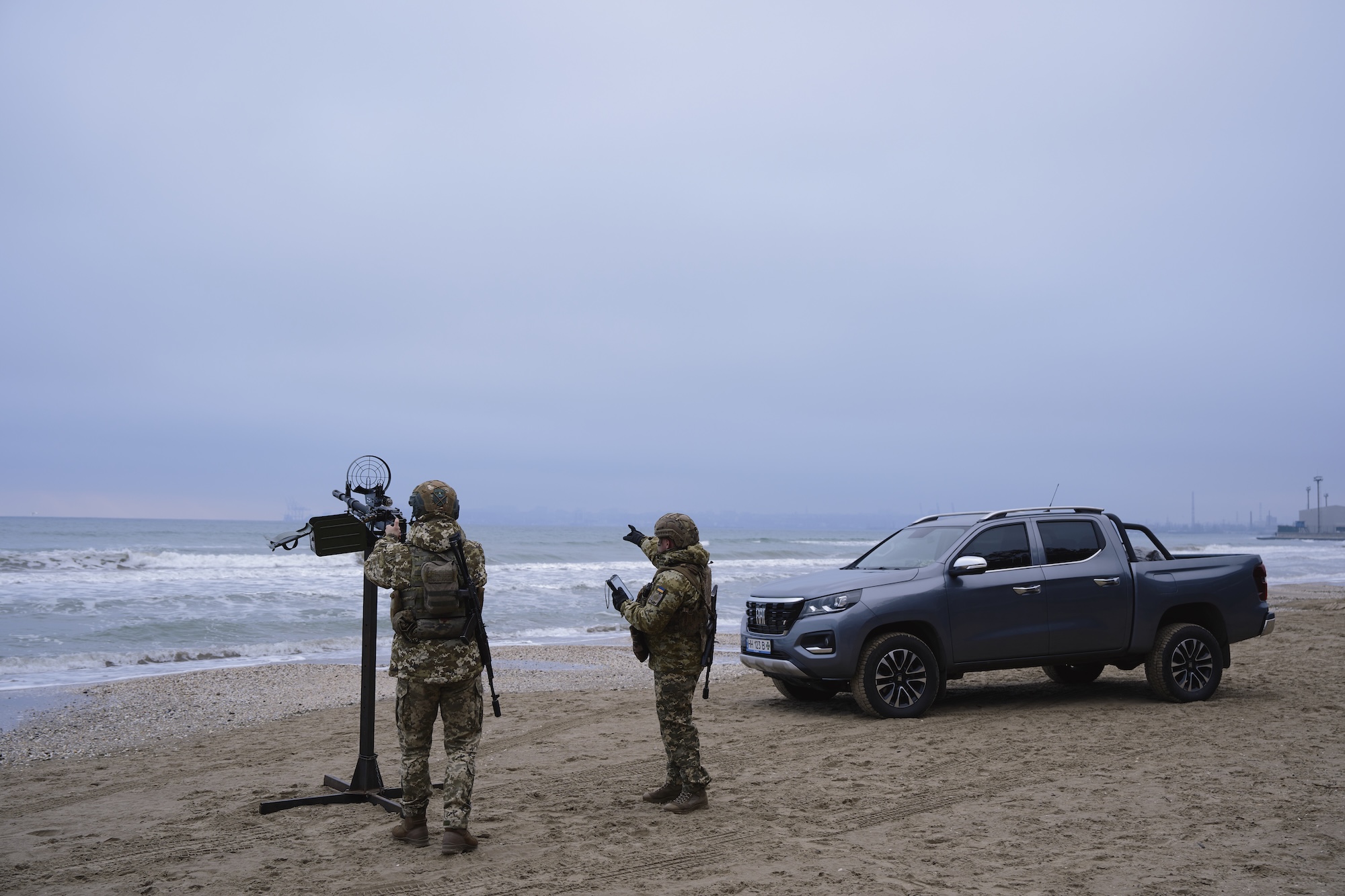
In short, the port is both an economic lifeline and a permanent military target. The sea is simultaneously Odesa’s greatest asset and its greatest vulnerability. The coastline, port infrastructure and shipping routes remain exposed—not only because of naval threats, but above all because of attacks from the air. When Russia attacks Kyiv, for example, drones have to fly long distances across land and several regions. Many are intercepted or disrupted before they reach their target. Odesa is different. Many drones are launched from occupied Crimea and approach across the sea. Our air defence is not as strong as Kyiv’s. Politically, that is understandable—Kyiv is the capital.
Nadin Heinich: How has the use of drones changed since the beginning of the war?
Oleksandr Kovalenko: The basic platform is still the Shahed-136—known in Russian service primarily as the Geran-2.
But Russia has continuously developed this drone. What began as Iranian-supplied systems has increasingly become a domestically produced Russian platform since 2023, with its own components, electronics and technical modifications.
There are now numerous variants. Russia is trying to make the drones more resistant to our electronic warfare capabilities—for example by using more robust communication and navigation modules. They have also diversified the roles drones play within a single attack. Alongside the “standard” attack drones, there are now supporting variants used for reconnaissance, identifying sources of electronic interference, and acting as communication relays to maintain connections within a drone swarm when we attempt to jam their signals.
Nadin Heinich: And what about Ukraine? Have you made similar modifications?
Oleksandr Kovalenko: We are continuously improving our drones as well. At the same time, we have significantly expanded strikes against targets inside Russia: more targets, more operations, and a higher operational tempo. But we have only been carrying out attacks on that scale since 2025. Russia has been doing so from the very beginning. In 2022, we carried out almost no such strikes; in 2023, somewhat more. Then came new drone types and greater operational ranges.
Nadin Heinich: Why not earlier? Was the technology not yet available?
Oleksandr Kovalenko: That’s a good question. In 2022, we were not yet well prepared for drone warfare, and we underestimated its potential. Even many people in the military did not expect drones to become so decisive in warfare. If you look at the frontline—with its armoured vehicles, weapons systems and fortifications—the Shahed-136 is actually a rather limited weapon. It is relatively easy to intercept and is designed to strike stationary targets, whereas the battlefield is highly dynamic. Against the rear areas, however, it is extremely effective—targeting energy infrastructure, logistics and civilian facilities. At first, Russia relied on expensive missiles for these attacks, but increasingly replaced them with the much cheaper Shahed drones.
Nadin Heinich: How do drones, ballistic missiles and cruise missiles now work together?
Oleksandr Kovalenko: In combined attacks, drones are used to engage and exhaust air defence systems. They are followed very quickly by ballistic and aeroballistic missiles, leaving almost no warning time. That is why people sometimes hear the explosion before the air raid siren. From occupied Crimea, targets such as Odesa can be reached within minutes. Kyiv is protected by Patriot air defence systems capable of intercepting these threats; Odesa is not. As a result, the city has only very limited protection against ballistic missiles—as is the case for most Ukrainian cities. The warning time is simply far too short.
Nadin Heinich: How often does that happen?
Oleksandr Kovalenko: There are no continuously updated public statistics specifically for Odesa. Ballistic missile attacks occur repeatedly, often in waves. The most recent one took place on the night of 12–13 December 2025—just four days ago.
Nadin Heinich: What is the primary target of these attacks—the port?
Oleksandr Kovalenko: If I knew that for certain, I wouldn’t tell you. But when an entire region, including Odesa, is left without electricity after an attack, it strongly suggests that the energy infrastructure was the intended target.
Nadin Heinich: How has the use of drones changed the frontline and the wider battlespace?
Oleksandr Kovalenko: The danger zone is no longer confined to the front line. Drones have pushed it deep into the rear, into areas that were once considered relatively safe. Because of FPV drones, many people now speak of a “kill zone”: a corridor in which small, fast systems can strike continuously, particularly against vehicles, supply lines and isolated positions.
It is important to distinguish between different types of drones. Long-range drones such as the Shahed—and similar platforms like the Gerbera—do not alter the front line itself, but they extend the war deep into the country’s interior. Their range is considerable; in principle, they can reach far into Central Europe. There have already been incidents in which Russian drones entered Polish airspace.
At the actual front, tactical drones dominate: small, inexpensive and deployed in large numbers. Their conventional range is around 15 to 20 kilometres. Fibre-optic FPV drones, which are difficult to jam, can reach much farther—sometimes more than 40 kilometres. Their drawback is that if the cable breaks or becomes tangled, the connection is lost. There are also larger attack drones capable of carrying heavier payloads and flying more than 50 kilometres, such as the Privet-82, a Russian kamikaze drone (“Privet” means “Hello”—they are often given ironic names). These systems primarily target the operational rear: assembly areas, supply depots, vehicle parks and troop rotation zones. Cities such as Kramatorsk, currently around 20 to 25 kilometres behind the front line, experience this first-hand.
What is particularly striking is how much imported technology these drones contain, especially from China. To put it somewhat bluntly, often only the airframe is actually Russian.
We have a rather crude expression for this: “knocked together from tin and sticks.” Key components, electronics and, in some cases, even manufacturing equipment come from abroad. Without these supplies, Russia’s war industry would have reached its limits much sooner.
Nadin Heinich: Is Germany still exporting goods that Russia uses for military purposes?
Oleksandr Kovalenko: We continue to find Western-made components in Russian weapons systems—chips, electronic components and other technologies. But we cannot “officially accuse” other countries as long as we cannot prove the entire supply chain. Many of these exports are routed through third countries. Armenia is a good example: in 2023 and 2024, it became an important transit and re-export hub for electronics destined for Russia.
Nadin Heinich: There is the official Air Alarm app to warn the public about attacks. At the same time, unofficial Telegram channels are often much more precise. Where do they get their information—from the military?
Oleksandr Kovalenko: Official channels deliberately provide only general information—the number of incoming threats and the regions affected. Some unofficial channels are in contact with the military and receive more detailed information almost in real time, such as the number of drones over a specific area. This allows them to warn civilians much more precisely. Officially, such details are not supposed to be made public. But if sharing them helps save lives, it happens anyway. The key is that these channels reach very large audiences and organise information on a regional basis—for Odesa, Dnipro, Kyiv, Lviv and other cities.
Nadin Heinich: Beyond the physical attacks, there is also the psychological dimension: constant air raid alerts, power cuts, no heating in winter, exhaustion. How significant is that?
Oleksandr Kovalenko: In 2022, that was probably the hardest part—we simply weren’t prepared for it. Now, in the fourth year of the war, it has become part of everyday life. Russia’s strategy of wearing down society and putting pressure on the government has, in reality, produced above all one thing: anger—and an even stronger determination not to surrender. As long as Russia believes it can achieve its objectives through force, it will be difficult to talk seriously about peace. At least, that is my assessment.
Text: Nadin Heinich
Photos: Heinrich Völkel
Odesa is younger than its myth suggests—and at the same time older than Catherine the Great. The name “Odesa” first appeared in a document dated 21 January 1795. In 1792, following the Treaty of Jassy, the territory became part of the Russian Empire. Two years later, Catherine II ordered the construction of a military harbour and commercial port at the settlement then known as Khadzhibei. Under the direction of the Spanish-born officer José de Ribas, work on the harbour facilities and cathedral began on 2 September 1794—a date that Odesa continues to celebrate as the city’s official founding day.
Yet the new city was not built on empty land. Khadzhibei had existed since the early fifteenth century as a settlement founded by the Crimean Khan Hacı Bey, complete with a fortress, mosque, Muslim cemetery, taverns and an already significant grain port. Over the centuries, the settlement passed from the Crimean Khanate to the Grand Duchy of Lithuania, later to the Ottoman Empire, and only afterwards came under Russian rule. The imperial narrative of Odesa’s “founding” by Catherine the Great largely overlooks this earlier history.
During the nineteenth century, Odesa developed into one of the Russian Empire’s most dynamic ports and trading centres. Its rise was driven by the success of the harbour, liberal administrative policies and its status as a free port between 1819 and 1859. Governors such as the French-born Duke of Richelieu, who led the city from 1803 to 1814, and later Count Mikhail Vorontsov, Governor-General of New Russia and Bessarabia, laid out its strict orthogonal street grid, recruited Western engineers and physicians, and established theatres, a public library, a lycée and learned societies. Trade in grain and other commodities attracted Germans, Greeks, Jews, Italians, Ukrainians, Russians, Armenians and many others. Cosmopolitan Odesa became the fourth-largest city in the Russian Empire, after St Petersburg, Moscow and Warsaw. This period is still widely regarded as the city’s “Golden Age”.
It is precisely this legacy that makes today’s debates so contentious. Odesa’s Golden Age was inseparable from the structures of the Russian Empire. Under the 2023 Ukrainian law On the Condemnation and Prohibition of the Propaganda of Russian Imperial Policy in Ukraine and the Decolonisation of Toponymy, municipalities are required to remove from public space names, symbols and monuments associated with the Russian Empire, the Soviet Union or the present-day Russian Federation.
