“Every time I publish a book, I also come to Architecture Matters.”
For the fourth time now, Reinier de Graaf, partner at the Rotterdam-based architecture office OMA, joined us as a guest — once again proving why he has long become far more than “just” an architect. Alongside his work as a designer, de Graaf has established himself internationally as a sharp-witted author and brilliant observer of the architectural profession. Following Four Walls and a Roof (2017), the novella The Masterplan (2021), and architect, verb (2023), he now presented his latest book, Architecture against Architecture: A Manifesto.
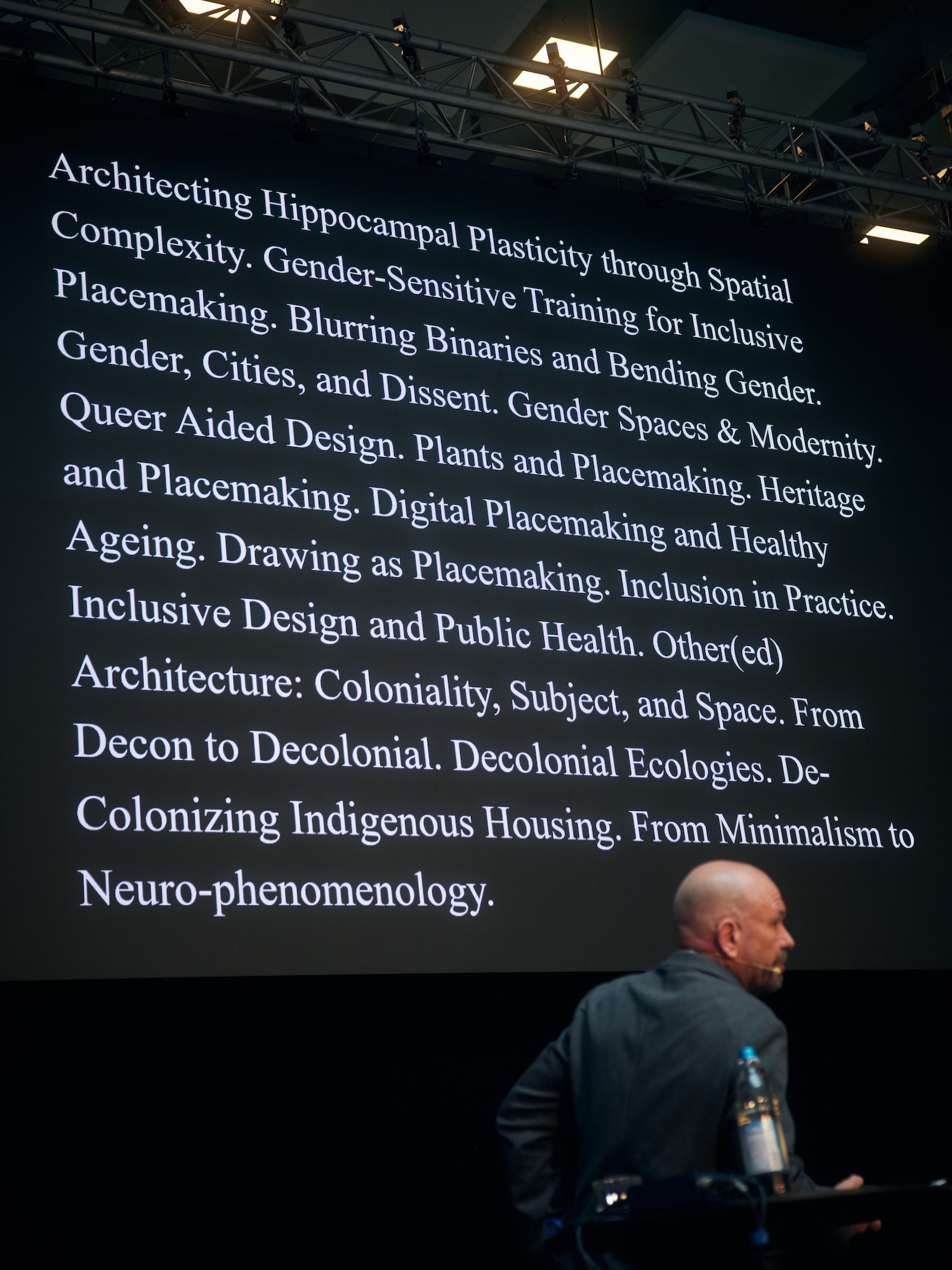
But rather than delivering a conventional reading, de Graaf gave a pointed performance: 14 theses for a better architectural world, presented in his signature dry, faintly sardonic English — critical, provocative, occasionally cynical, yet always razor-sharp. Chapter by chapter, he exposed the uncomfortable truths the profession itself often prefers to avoid.
He spoke about the rise and fall of star-architect culture through the example of David Adjaye, and about how a media scandal can have existential consequences for more than 100 employees — even in the absence of a court ruling and without the actual work of the office ever being called into question. He also dissected the grotesque imbalance between the value architecture creates and the compensation of those who produce it: while real-estate values soar, architects themselves remain at the very bottom financially.
De Graaf’s responses are radical: unions for architects, collective working models, the abolition of copyright, trust in AI as a guardian of good taste, no new construction while vacancies persist — and an architecture that finally adapts seriously to climate change instead of hiding behind the buzzword of “sustainability.”
Yet the evening’s greatest moment of discomfort came with his most provocative demand: Cut out the middlemen! In conversation with Nadin Heinich, de Graaf elaborated on what he meant by this: direct connections between architects and users — without the intermediaries whose primary role is to extract profit along the way. A direct challenge to the traditional real-estate industry, whose representatives were well represented in the audience and, at that moment, visibly uneasy.
The subsequent conversation with David Basulto, founder of ArchDaily, turned to the question of morality and responsibility when building for authoritarian regimes. De Graaf’s response was as sober as it was provocative: “Morality is measured by what you do — not by whom you do it for.” A statement that lingered long afterwards, particularly in light of the increasingly autocratic tendencies emerging even within Western democracies.
About:
Reinier de Graaf is a Dutch architect and writer. He is a partner at the Office for Metropolitan Architecture (OMA) and co-founder of its think tank, AMO. He is responsible for major building and masterplanning projects across Europe and the Middle East, including Al Daayan Health District (Doha), Norra Tornen (Stockholm), Holland Green (London) and De Rotterdam (Rotterdam).
De Graaf is the author of “Four Walls and a Roof: The Complex Nature of a Simple Profession”, “architect, verb”, and the recent manifesto “Architecture Against Architecture”: The authority of architects is crumbling, their methods no longer tenable. In a highly critical introspection, Reinier de Graaf explores the tough choices ahead and the course of action that must follow.
